(509) 800-4136
⚡ LICENSED WASHINGTON (01) ELECTRICAL CONTRACTORS · LIC #EC-SPOKEV*821JA

EV Charger Panel Upgrade Spokane, WA

100A to 200A Electrical Capacity Guide, NEC Article 220 Load Calculations & Turnkey Service Modernizations for Inland Northwest Homes.

  • ✓
    Turnkey 200A & 400A Upgrades: Replace outdated 60A and 100A panels with heavy-duty 40/80 circuit load centers and whole-home surge protection.
  • ✓
    NEC Article 220 Load Calculations: Certified mathematical assessments to determine your home's exact electrical capacity and continuous headroom.
  • ✓
    Smart Panel Alternatives: Install intelligent Energy Management Systems (DCC-9, SimpleSwitch) to permit EV charging on 100A panels without full service upgrades.
  • ✓
    Avista Utilities Coordination: Turnkey permit acquisition, meter disconnect coordination, and utility inspection handling in Spokane & Spokane Valley.
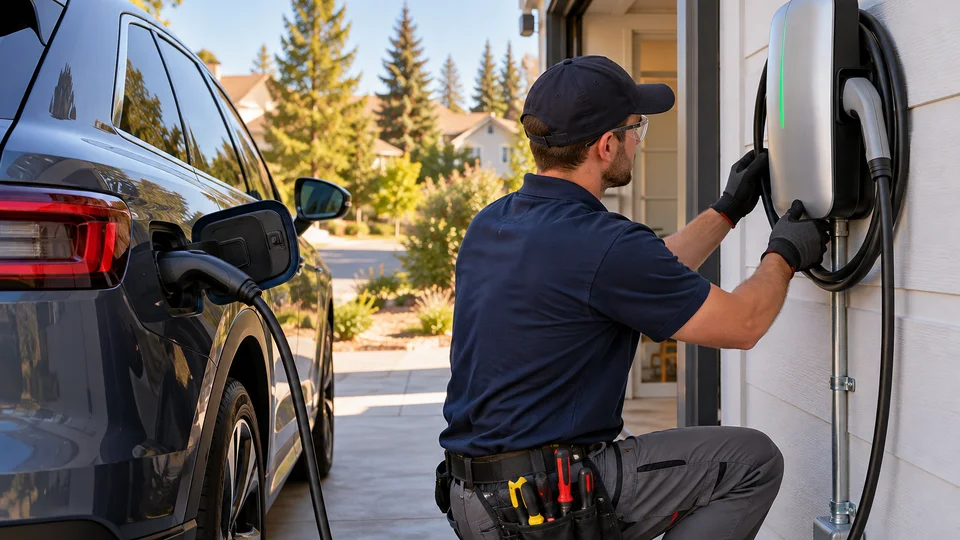
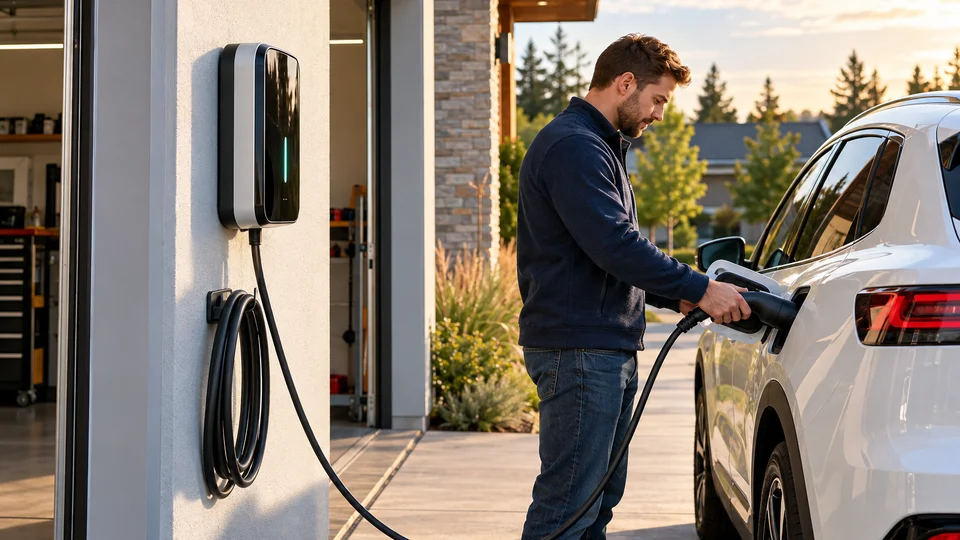
Licensed electrician upgrading residential electrical panel for EV charging in Spokane WA
Avista Rebate Ready · Up to $1,000 Off Electric Service Upgrades

Check Panel Capacity

Get a precise NEC load calculation & upfront panel modernization estimate.

WA (01) Electrical Contractor · Lic #EC-SPOKEV*821JA
Avista Utilities Schedule 77 Trade Ally
City of Spokane & Spokane Valley Permitted
100% NEC 2023 Article 220 Compliant
200 A
Standard Modern Service Capacity
48 A
Max Continuous EV Load (60A Breaker)
Up to $1,000
Avista Electric Transport Grant
1 Day
Typical Same-Day Panel Upgrade

Electrical Panel Capacity & EV Charging in Spokane, WA

Adding a high-speed Level 2 electric vehicle charging station to your Spokane home delivers overnight battery replenishment, eliminates reliance on commercial public fast chargers, and significantly lowers daily driving costs. However, before mounting a 240-volt charging station to your garage wall, there is a fundamental electrical reality every homeowner must address: Does your home's main electrical service panel have sufficient capacity to power an EV charger safely?

An electric vehicle charger is unlike any other household appliance. While an electric oven, clothes dryer, or microwave cycles power intermittently for 15 to 45 minutes, an electric vehicle charger is classified by National Electrical Code (NEC) Article 625 as a continuous electrical load. When plugged in, a Level 2 charger draws 32 to 48 continuous amperes for four to ten consecutive hours without cycling off.

If your home's main electrical panel is already heavily loaded with an electric central heat pump, electric water heater, electric range, and air conditioning, connecting a 50-amp or 60-amp EV circuit can push total household demand past safe operational limits. In older Spokane neighborhoods featuring original 100-amp electrical panels, this causes frequent main breaker trips, severe thermal stress on aging busbars, and hazardous overheating.

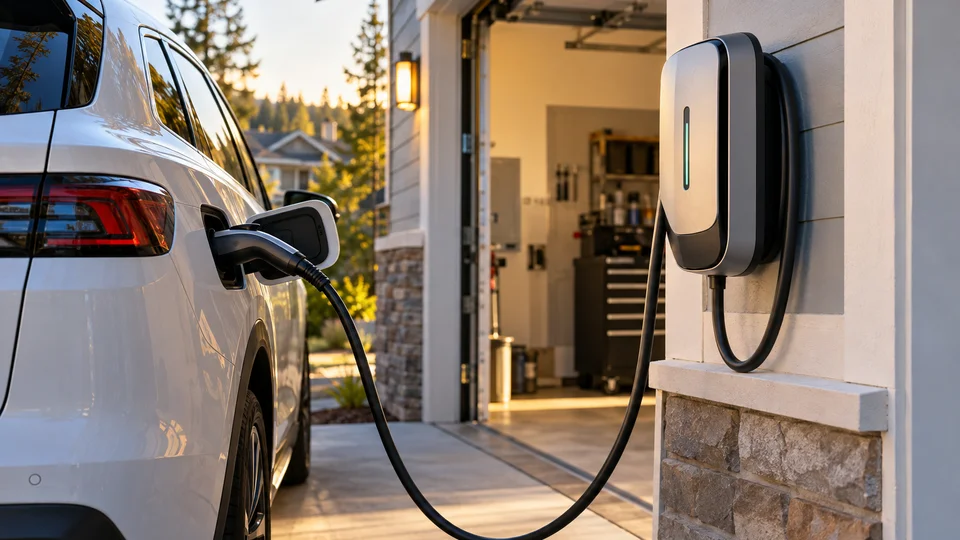
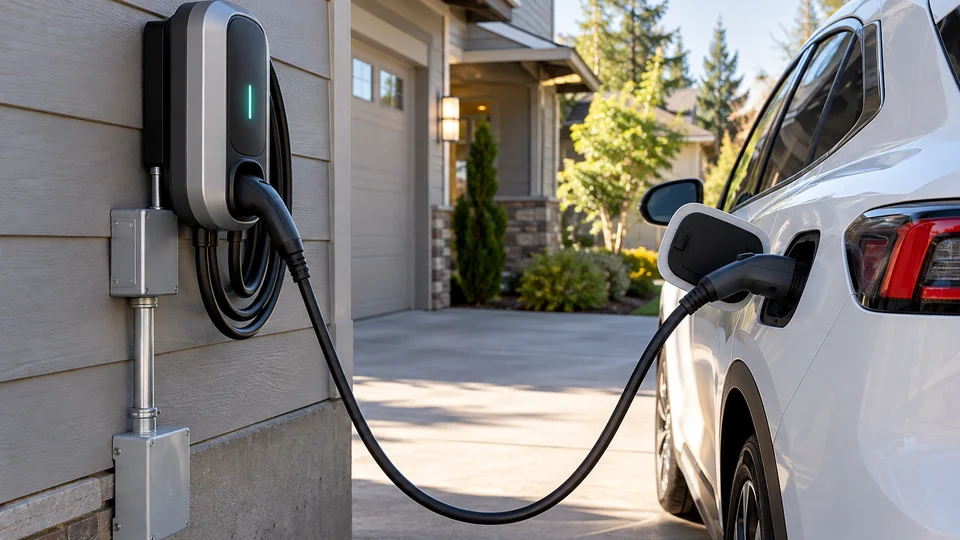
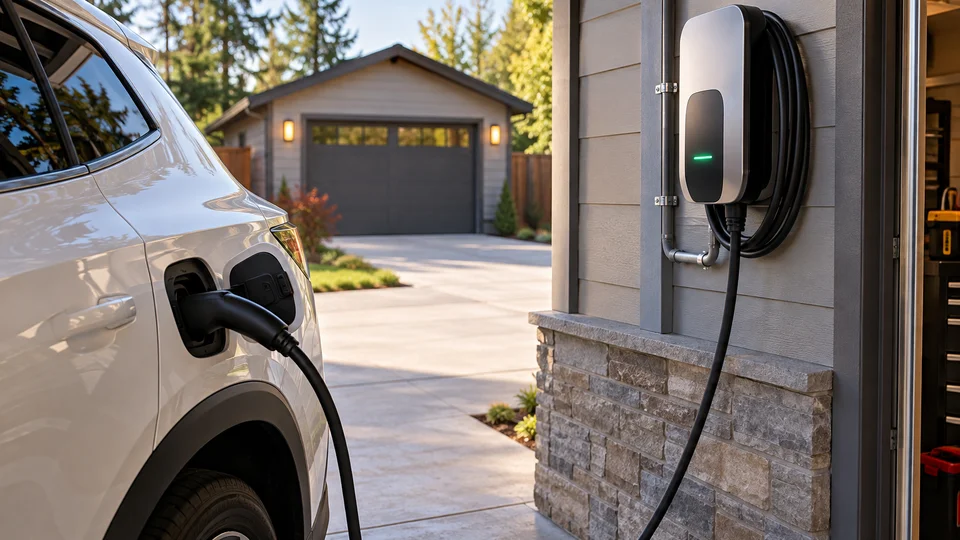
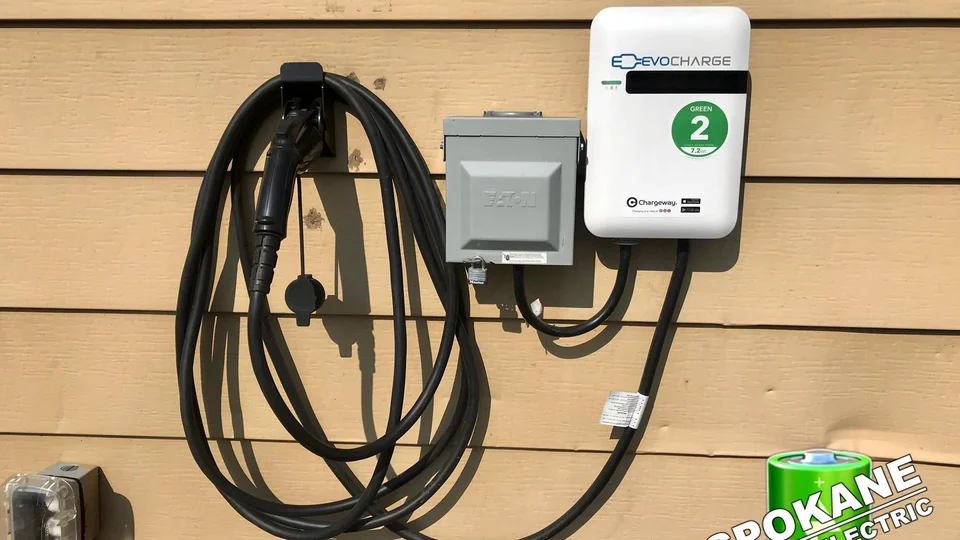
Eaton electrical disconnect and 240V dedicated EV circuit installation
Eaton heavy-duty disconnect and dedicated 240V electrical feed installed beside a home EV charging station in Spokane.

Continuous Load Physics & NEC Article 625

The National Electrical Code enforces an 80% continuous load safety factor (NEC 210.20 & 625.42). An electrical circuit cannot run continuously above 80% of its rated capacity for more than 3 hours without severe thermal degradation.

  • ✓
    32A Charging: Requires a minimum 40-amp dedicated double-pole breaker (7.7 kW output).
  • ✓
    40A Charging: Requires a 50-amp dedicated double-pole breaker (9.6 kW output).
  • ✓
    48A Charging: Demands a massive 60-amp dedicated breaker (11.5 kW output).

Thermal Degradation & Aging Busbar Risks

On an older 100-amp electrical panel, a single 48-amp EV charger consumes nearly 50% of the entire service capacity of the entire home. When combined with winter heating loads in Spokane, continuous heat causes terminal lugs to expand and contract, loosening electrical connections.

  • ✓
    Main Breaker Tripping: The 100A main breaker trips when cooking dinner while charging an EV on cold winter evenings.
  • ✓
    Busbar Scorching: High continuous amp draw across oxidized aluminum busbars causes arcing and thermal pitting.
  • ✓
    Code Non-Compliance: Washington Labor & Industries (L&I) inspectors will reject EV permit applications that lack a certified load calculation.

100-Amp vs. 200-Amp vs. 400-Amp Service: Technical Capacity Breakdown

Understanding electrical service sizing is best viewed through total wattage. In residential split-phase electrical systems, voltage is delivered at 240 volts across two 120-volt hot legs. Multiplying amperage by 240 volts reveals total household power capacity.

Historic Baseline

100-Amp Service

Standard in Spokane homes built between 1950 and 1980. Adequate for gas-heated homes with modest appliances, but severely restricted for EV charging.

Total Power
24.0 kW
Safe Cont. Load
19.2 kW
Breaker Spaces
16 to 24 Slots
EV Feasibility
Limited / Requires EMS

If your home has an electric range, electric clothes dryer, and central air conditioning, a 100A panel typically has zero spare capacity for an EV charger without smart load shedding.

Modern Standard

200-Amp Service

The modern building standard for single-family residences in Washington State. Provides double the capacity of a 100A panel and robust expansion headroom.

Total Power
48.0 kW
Safe Cont. Load
38.4 kW
Breaker Spaces
30 to 42 Slots
EV Feasibility
100% Full 48A Speed

Allows running central heat pumps, electric water heaters, kitchen appliances, and a full 48-amp Level 2 charger simultaneously without risk of breaker trips.

Heavy Estate & Dual EV

400-Amp Service

Typically engineered as a 320A continuous / 400A peak meter base feeding dual 200A interior panels. Ideal for large luxury homes and multi-vehicle families.

Total Power
96.0 kW
Safe Cont. Load
76.8 kW
Breaker Spaces
60 to 84 Slots
EV Feasibility
Dual 48A Dedicated

Engineered for properties over 3,500 sq ft in Five Mile Prairie or Liberty Lake featuring dual central heat pumps, hot tubs, heated workshops, and two full-speed EV charging stations.

Electrical Service Rating Total Usable Capacity Continuous Safe Headroom Level 2 EV Compatibility Breaker Slot Expansion Average Spokane Cost
60-Amp (Historic Fuse Box) 14.4 kW (240V × 60A) 11.5 kW Max Incompatible (Fire Hazard) 4 to 8 Fused Circuits $3,200 – $4,800 (Full Upgrade)
100-Amp Main Panel 24.0 kW (240V × 100A) 19.2 kW Continuous Conditional (Requires 24A or EMS) 16 to 24 Breaker Slots $1,800 (EMS) or $3,500 (Upgrade)
200-Amp Main Service 48.0 kW (240V × 200A) 38.4 kW Continuous Optimal (Full 48A / 60A Breaker) 30 to 42 Modern Spaces $2,800 – $4,200 Complete
400-Amp Dual-Panel Service 96.0 kW (240V × 400A) 76.8 kW Continuous Maximum (Dual 48A Unrestricted) 60 to 84 Dual Load Spaces $5,500 – $8,500 Complete

The NEC Article 220 Residential Load Calculation: Precision Panel Testing

Before a licensed Washington electrical contractor can pull an electrical permit in Spokane for a service upgrade or high-amperage EV circuit, they must perform an official NEC Article 220 Load Calculation. This certified calculation mathematically proves whether your electrical service panel can handle the new EV load without exceeding safe capacity.

The National Electrical Code provides two distinct calculation methods: the Standard Method (Part III) and the Optional Calculation (Part IV). Most residential contractors utilize the Optional Calculation (NEC 220.82), which applies realistic demand factors based on how household appliances actually operate simultaneously:

  • ✓
    General Lighting & Small Appliances: 3 volt-amperes (VA) per square foot of living area, plus 1,500 VA for each small appliance kitchen circuit and laundry branch.
  • ✓
    Demand Factor Application: The first 10,000 VA of general load is calculated at 100%, and the remaining balance is calculated at 40% demand factor.
  • ✓
    HVAC & Heat Pump Systems: 100% of the largest heating or air conditioning load, plus supplemental resistance heat strips.
  • ✓
    Electric Vehicle Supply Equipment (EVSE): Calculated at 100% continuous nameplate rating without any demand factor discounts (NEC 625.42).
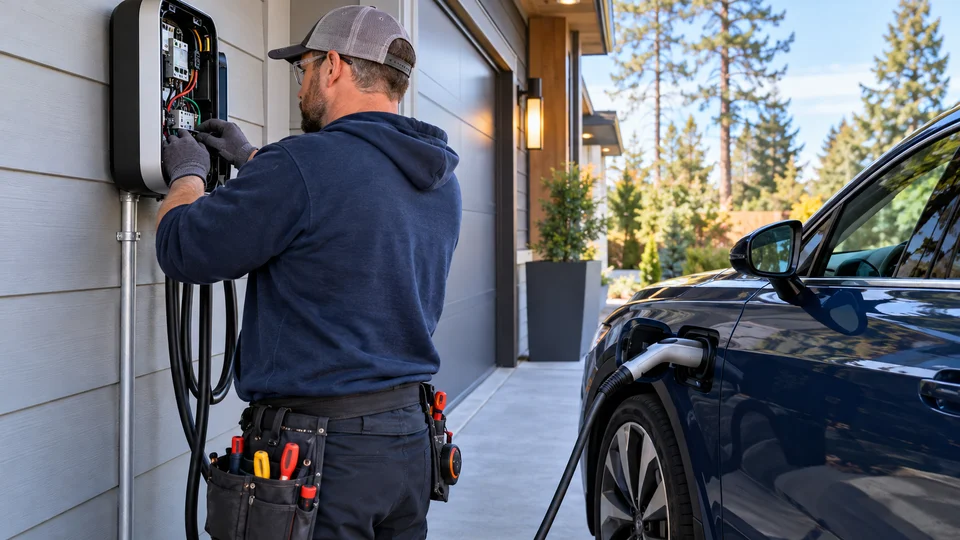
Electrician performing NEC Article 220 electrical panel capacity calculation
Licensed electrical contractor testing circuit breaker capacity and performing NEC load calculations in a Spokane garage.

Real-World Case Study: 2,200 Sq Ft South Hill Spokane Home on 100A Panel

To understand why a 100A panel fails the math when adding a Level 2 charger, consider a typical mid-century South Hill craftsman home:

• Living Space (2,200 sq ft × 3 VA) = 6,600 VA
• Kitchen Circuits (2 × 1,500 VA) + Laundry (1,500 VA) = 4,500 VA
• Electric Clothes Dryer (Nameplate) = 5,000 VA
• Electric Cooking Range (Nameplate) = 8,000 VA
• Electric Water Heater = 4,500 VA
• Subtotal General Load = 28,600 VA
• First 10,000 VA @ 100% = 10,000 VA
• Remainder (18,600 VA @ 40%) = 7,440 VA
• Total General Demand = 17,440 VA
• Central Air Conditioning (4 Ton Compressor) = 6,000 VA
• Calculated Existing Demand = 23,440 VA (97.67 Amps @ 240V)

Result: This home is already operating at 97.7 amperes of calculated demand on a 100A service. Adding even a small 32-amp EV charger (7,680 VA = 32A) pushes total calculated demand to 129.7 amperes. Installing this charger without an electrical service panel upgrade or a smart load-shedding device violates National Electrical Code and will fail City of Spokane municipal inspection.

The Spokane Housing Reality: Historic Neighborhoods vs. Modern Suburbs

Spokane's diverse housing stock spans more than 130 years of residential construction. The electrical challenges an electrician encounters in a 1912 South Hill Craftsman are completely different from a 2018 construction in North Indian Trail.

1890 – 1945 Construction

Historic Districts

South Hill, Browne's Addition, Cliff/Cannon, West Central

These homes frequently feature original 60A or 100A electrical services, early split-bus panels, or remaining knob-and-tube wiring branches. Electrical panels are often situated in low-clearance basement utility rooms or cramped closets that violate modern NEC working clearance codes.

  • ✓
    Overhead Mast Clearance: Aging weatherheads require elevation to clear Spokane municipal alleyways.
  • ✓
    Grounding Deficiencies: Historic homes often rely solely on metallic water pipes, requiring dual 8-foot ground rods.
1950 – 1985 Construction

Post-War & Mid-Century Suburbs

Shiloh Hills, Balboa, Town & Country, Whitman, Comstock

Built during Spokane's post-war suburban expansion, these homes were wired with standard 100A or 125A main panels. While grounded with copper or aluminum, these panels are almost universally 100% full with zero vacant breaker knockouts.

  • ✓
    Tandem Breaker Overcrowding: Busbars are packed with "cheater" twin breakers that overheat under continuous loads.
  • ✓
    Aluminum Branch Feeds: Require anti-oxidant paste and torque-certified terminal connections.
1990 – Present Construction

Modern Subdivisions

Five Mile Prairie, North Indian Trail, Southgate, Moran Prairie

Nearly all modern homes built in Spokane County feature 200A main service panels with underground lateral utility feeds. However, high base electrical loads from central air conditioning, dual ovens, finished basements, and hot tubs can still leave limited headroom.

  • ✓
    Ample Physical Space: 200A panels accommodate dual-pole 50A or 60A breakers directly.
  • ✓
    Finished Garage Routing: Surface conduit or drywall fishing required to route power from panel to charger.
Modern electrical panel in residential garage workshop for EV charging
Modern 200A electrical service panel with dedicated EV conduit feed installed inside a residential Spokane garage workshop.

Navigating Historic Panel Placement in Spokane

When modernizing an electrical service in older Spokane homes, electrical contractors frequently encounter panel locations that no longer meet current Washington State electrical codes. Under NEC Article 110.26, an electrical service panel requires dedicated working space:

  • ✓
    Clear Width: At least 30 inches wide or the width of the equipment, whichever is greater.
  • ✓
    Working Depth: Minimum 36 inches of clear forward depth extending in front of the panel door.
  • ✓
    Headroom: Minimum 6 feet 6 inches of clear ceiling clearance above the panel floor.

If your historic basement or closet does not meet these clearances, our electricians coordinate an exterior service relocation, installing a clean, weather-sealed NEMA 3R 200A meter-panel combo outside your home.

Dangerous & Obsolete Electrical Panels: Mandatory Replacement Equipment

In older Spokane homes, electrical contractors frequently identify legacy electrical panels that pose extreme fire hazards when subjected to the prolonged, continuous electrical load of an electric vehicle charger. If your home has any of the following brands, replacement is mandatory prior to EV charger installation.

Critical Fire Hazard

Federal Pacific Electric (FPE) Stab-Lok

Manufactured from the 1950s through the 1980s, FPE Stab-Lok panels are widely installed across Spokane's mid-century neighborhoods. Independent testing confirms that up to one in three FPE circuit breakers fails to trip during an electrical overload or short circuit.

⚠️ Connecting a 40A or 50A continuous EV load to an FPE panel creates an unacceptable risk of electrical fire. Insurance companies in Washington State frequently cancel policies or refuse coverage for homes with active FPE panels.

Thermal Meltdown Risk

Zinsco & GTE-Sylvania Panels

Popular throughout Spokane in the 1970s, Zinsco panels feature an aluminum busbar design with thin copper plating. Over decades of operation, electrical current causes oxidation and galvanic corrosion between the breaker clip and the busbar.

⚠️ Circuit breakers literally melt and weld themselves to the busbar. The breaker appears to be in the "ON" position but cannot trip when an overcurrent occurs, transferring intense thermal energy directly into the wall framing.

Outdated Technology

Split-Bus Panels & 60A Fuse Boxes

Split-bus panels (popular 1960–1975) lack a single main service disconnect breaker, relying on the "Rule of Six" disconnects. Fuse boxes (pre-1960) utilize screw-in glass fuses that are completely incompatible with modern 240V high-amperage EV circuits.

⚠️ Fuse boxes and split-bus panels cannot pass modern NEC 2023 Article 230 electrical service inspections in Spokane and must be modernized to modern single-main-breaker panels.

Panel Upgrade vs. Dedicated 240V Circuit: Clearing the Confusion

Many Spokane homeowners confuse an electrical panel upgrade with installing an EV charging circuit. Understanding the distinction ensures you invest only in the electrical scope your home actually requires.

Standard EV Requirement

Dedicated 240V Circuit Installation

Every Level 2 EV charging station requires its own dedicated 240V electrical branch circuit. This scope involves:

  • ✓
    Installing a new 40A, 50A, or 60A double-pole circuit breaker inside your existing main electrical panel.
  • ✓
    Routing heavy-gauge copper wiring (6 AWG or 4 AWG THHN/Romex) inside protective metal conduit to your vehicle parking spot.
  • ✓
    Terminating into a hardwired charging unit or a commercial NEMA 14-50 receptacle with GFCI protection.
  • ✓
    Typical Cost: $650 – $1,400 (assumes your existing panel has available capacity).
Comprehensive Service Upgrade

Full Electrical Service Panel Modernization

A panel upgrade replaces the entire electrical infrastructure bringing utility power into your home. This scope involves:

  • ✓
    Coordinating with Avista Utilities to disconnect and upgrade the utility service drop or underground lateral cable.
  • ✓
    Replacing the exterior meter socket, weatherhead mast, and rigid conduit to 2-inch or 2.5-inch diameter.
  • ✓
    Installing a brand-new 200A or 400A main service breaker panel with 30 to 42 breaker spaces.
  • ✓
    Installing dual copper grounding rods and whole-home Type 2 surge protective devices (SPD).
  • ✓
    Typical Cost: $2,800 – $4,200 (includes city permits, utility coordination, and inspection).

Smart Alternatives to a $3,500+ Panel Upgrade: Energy Management Systems (EMS)

If your Spokane home has a 100-amp electrical panel in good physical condition, you are not necessarily forced into an expensive $3,500+ panel modernization. Under National Electrical Code Article 625.42 and 750, homeowners can legally install intelligent Energy Management Systems (EMS) that safely govern electrical demand.

An Energy Management System acts as an automatic digital gatekeeper. Rather than assuming all household appliances will run at the exact same moment, the EMS continuously monitors real-time electrical draw across your main utility service lines using current transformers (CTs).

  • ✓
    DCC-9 EV Energy Management Box: Installed directly between your main 100A panel and the EV charger. It continuously measures total panel load. If total demand exceeds 80% (80A on a 100A panel), it instantly de-energizes the EV charger until heavy appliances turn off.
  • ✓
    SimpleSwitch 240V Load-Sharing Controller: Connects an EV charger to an existing 240V 30A or 50A circuit (such as an electric clothes dryer or electric oven), giving the primary appliance absolute priority and automatically charging the vehicle when the dryer is idle.
  • ✓
    Software Breaker Derating (Zero Hardware Cost): Most smart chargers (Tesla Wall Connector, ChargePoint Home Flex) allow licensed electricians to digitally commission the charger for a 20A, 24A, or 30A circuit, adding 15 to 22 miles of range per hour without overloading a 100A panel.
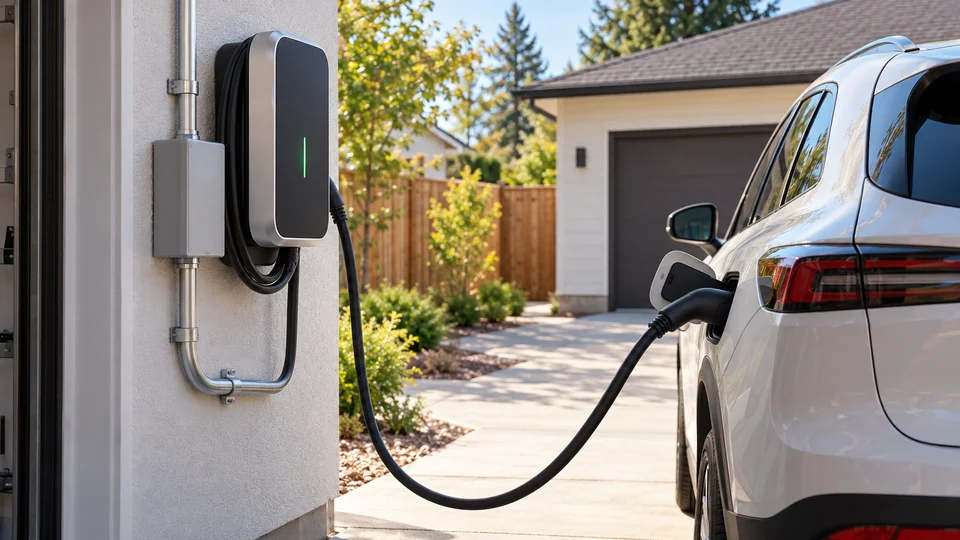
Smart energy management system and automated load shedder for EV charging
Smart energy management load-shedding control module installed to permit Level 2 EV charging safely on an existing electrical service panel.

Subpanels vs. Main Panel Upgrades: Space Expansion vs. Capacity Addition

A common misconception among homeowners is that adding an electrical subpanel increases your home's total electrical power. In reality, a subpanel creates physical space for additional circuit breakers, but does not add a single ampere of electrical capacity from the utility.

Electrical subpanel and conduit junction feed for multi-circuit EV chargers
Electrical subpanel and EMT conduit junction feed installed to expand breaker slots for EV chargers and garage workshop circuits.

When Does a Subpanel Make Sense?

A subpanel is the ideal solution when your existing main service panel has sufficient calculated electrical capacity (such as a 200A panel), but every single physical breaker knockout is occupied with existing household circuits.

  • ✓
    Garage Outbuilding Feeds: Installing a 60A or 100A subpanel in a detached garage provides local breakers for EV charging, overhead lighting, door openers, and power tools.
  • ✓
    Cost-Effective Expansion: A subpanel installation typically costs $850 to $1,500, avoiding the $3,500+ cost of a full service modernization when your main service drop has ample capacity.
  • ✓
    Strict 4-Wire NEC Grounding: Subpanels require separate, isolated neutral and ground busbars (no bonding jumper) connected via a 4-conductor feeder cable.

The Complete Panel Upgrade Workflow: Step-by-Step Avista Coordination

Modernizing a residential electrical service panel in Spokane requires precise coordination between your licensed electrical contractor, Avista Utilities, and municipal building inspectors. Here is how our turnkey process delivers a seamless single-day service upgrade.

1

On-Site Engineering Assessment & NEC Load Calculation

Our Washington (01) electrical estimator visits your home, examines existing service drops, verifies working clearances, and calculates exact household electrical demand under NEC Article 220.

2

Avista Utilities Work Order & Service Disconnect Scheduling

We submit engineering specifications directly to Avista Utilities to open an electric service upgrade work order. Avista verifies transformer sizing and schedules a morning utility service disconnect.

3

Permit Acquisition Through City of Spokane or L&I

We pull all required electrical permits through the City of Spokane Development Services Center or the Washington State Department of Labor & Industries (L&I), ensuring full compliance.

4

Morning Utility Service Disconnect & Demolition

Avista technicians arrive at 8:00 AM to pull the electric meter and cut power at the overhead weatherhead or underground transformer. Our crew safely removes the obsolete electrical panel.

5

Installation of Modern 200A Meter Base, Mast & Load Center

We mount a heavy-duty NEMA 3R meter base, new 2-inch rigid steel service mast, and a modern 40/80-circuit interior load center. All existing branch circuits are carefully relabeled and connected.

6

Municipal Inspection & Same-Day Avista Re-Energization

The municipal electrical inspector arrives for rough/final approval. Once signed off, Avista reconnects the utility service lines, installs a digital AMI smart meter, and restores full household power before 4:00 PM.

7

Dedicated EV Circuit Wiring, Whole-Home Surge & Commissioning

With 200A service live, we install your dedicated 50A or 60A EV charging circuit, mount the charging station, commission whole-home Type 2 surge protection, and test the EV station under full load.

Avista Utilities meter base and overhead service disconnect coordination in Spokane
Avista Utilities electric meter base and service disconnect infrastructure coordinated during a Spokane electrical panel modernization.

Spokane Municipal Permitting & Washington State Electrical Codes

In Washington State, electrical service panel upgrades and dedicated EV charging circuits cannot be performed without formal permits and mandatory inspections. Unpermitted electrical work can void homeowners insurance policies and create severe liabilities during home resale.

Permit Authority

City of Spokane vs. L&I Jurisdiction

Properties within the City of Spokane municipal boundaries are permitted through the City of Spokane Development Services Center. Homes in Spokane Valley, Liberty Lake, Cheney, and unincorporated Spokane County fall under Washington State Department of Labor & Industries (L&I).

Our electrical contracting team handles 100% of the paperwork, drawings, and permit fees directly with the applicable municipal jurisdiction.

Code Standard

NEC 2023 Washington Amendments

Washington State operates under the 2023 National Electrical Code (NEC) with state-specific WAC 296-46B amendments. This mandates whole-home surge protection (NEC 230.67), emergency exterior service disconnects (NEC 230.85), and tamper-resistant GFCI protection.

Every installation is engineered to satisfy all current code requirements, ensuring your home easily passes inspection on the first visit.

Home Resale Protection

Legal & Insurance Liability

When selling a Spokane home, buyers' home inspectors examine the electrical panel for formal municipal permit stickers. Unpermitted panels can delay closing, force expensive retroactive permitting, or require complete re-wiring.

We provide official signed inspection certificates from the city or state inspector upon project completion for your permanent home records.

Comprehensive Cost Breakdown for Spokane Panel Modernizations (2026 Price Guide)

Electrical service panel modernization pricing in Spokane depends on whether your utility lines are overhead or underground, the distance from the meter to the panel, and whether existing wiring requires code correction. Here is our realistic pricing guide.

Upgrade Scope Hardware & Materials Labor, Permits & Utility Typical Spokane Total Best Suited For
100A to 200A Overhead Service $900 – $1,400 $1,600 – $2,400 $2,500 – $3,800 Standard single-family homes with overhead utility drop from alley or street.
100A to 200A Underground Service $1,200 – $1,800 $2,300 – $3,700 $3,500 – $5,500 Suburban subdivisions with underground lateral conduits; may require trenching.
200A to 400A Dual-Panel Upgrade $2,200 – $3,500 $3,300 – $5,000 $5,500 – $8,500+ Large custom homes, dual EV charging stations, detached workshops, heated pools.
Smart EMS (DCC-9 / SimpleSwitch) $1,100 – $1,600 $700 – $1,200 $1,800 – $2,800 Homes seeking to avoid full service panel replacements by using automated load shedding.
60A to 100A Garage Subpanel $350 – $650 $600 – $950 $950 – $1,600 Main panels that have sufficient amperage capacity but zero vacant breaker spaces.

Key Cost Variables in Spokane County

  • ✓
    Overhead vs. Underground Feed: Underground lateral upgrades requiring trenching through Spokane basalt rock add civil excavation expenses.
  • ✓
    Service Mast Elevation: If roof clearance or alleyway height requires a taller rigid steel mast, structural roof flashing is required.
  • ✓
    Grounding System Modernization: Driving dual 8-foot copper grounding rods into rocky Eastern Washington soil requires specialized rotary hammer drivers.

The True Value of a 200A Panel Upgrade

While an electrical panel upgrade represents a significant upfront investment, it fundamentally transforms your home's infrastructure:

  • ✓
    100% Electrification Readiness: Accommodates central heat pumps, heat pump water heaters, induction cooking, and solar integration.
  • ✓
    Home Resale Value: Modern 200A electrical service is a major selling point highlighted by Spokane real estate appraisers.
  • ✓
    Fire Safety & Insurance Compliance: Eliminates aging busbars, obsolete breakers, and insurance cancellation risks.

Avista Rebates, Washington Clean Energy Grants & Federal Tax Credits

Substantial federal, state, and utility incentives exist to significantly offset the cost of upgrading your electrical service panel in Spokane County.

Utility Incentive

Avista Schedule 77 Electric Transportation

Avista Utilities offers residential rebates of up to $1,000 to offset electrical service upgrades and dedicated 240V circuit installations required for Level 2 EV charging stations.

We are registered Avista trade allies and assist homeowners with all documentation and post-inspection rebate filings.

Federal Credit

Federal Section 25C Energy Efficient Credit

Under the Inflation Reduction Act, upgrading an electrical panel to 200A or higher qualifies for a 30% federal tax credit up to $600 when installed in conjunction with qualifying heat pumps or clean energy home improvements.

Consult with your CPA to claim IRS Form 5695 during annual tax filings.

State Exemption

WA State Sales Tax Exemption (RCW 82.08.816)

Washington State provides a 100% sales tax exemption on the purchase and installation labor of electric vehicle charging equipment and associated electrical infrastructure, saving Spokane homeowners approximately 9.0% on project costs.

Applied directly to our invoices for immediate upfront consumer savings.

Dual-EV Households & Future-Proofing: Engineering for Multiple Vehicles

Electric vehicle adoption is rapidly transitioning from single-car curiosity to multi-vehicle households. By 2030, an estimated 40% of EV-owning families in Spokane will own two electric vehicles. Designing an electrical upgrade must account for simultaneous charging demands.

When two electric vehicles charge simultaneously at full 48-amp Level 2 speed, they draw a staggering 96 amperes continuously (equivalent to 23 kW of continuous power). That single charging event consumes nearly 100% of an entire 100A panel, and half of a 200A service.

  • ✓
    Smart Dynamic Power Sharing: Modern EV chargers (such as dual Tesla Wall Connectors or Wallbox Pulsar Plus) communicate over a local Wi-Fi mesh network to share a single 60A circuit. When one vehicle is plugged in, it charges at full 48A speed; when both plug in, power automatically splits 24A / 24A, preventing panel overloads.
  • ✓
    Dedicated 400A Service for Unrestricted Dual Charging: For large estates or high-mileage drivers needing simultaneous full-speed 48A charging on both vehicles without speed throttling, a 400A service upgrade provides independent 60A dedicated breakers for each stall.
Dual EV charging setup with dynamic power sharing and smart load balancing in Spokane garage
Homeowner charging vehicle in residential driveway with workshop electrical capacity engineered for dual-EV expansion.

Mandatory Whole-Home Surge Protection & Grounding Electrode Modernization

Whole-home Type 2 surge protective device and dual grounding electrode installation
Modern 200A service panel installation featuring Type 2 whole-home surge protective device (SPD) and dual grounding electrodes.

When investing in an electrical service panel upgrade, two critical safety components are legally mandated by current electrical codes and are indispensable for protecting sensitive EV battery charging circuitry.

Mandatory Whole-Home Surge Protection (NEC 230.67)

Under NEC 2020/2023 Article 230.67, all newly installed or upgraded residential electrical service panels must feature an integrated Type 1 or Type 2 Surge Protective Device (SPD).

  • ✓
    Protects EV Inverters & BMS Modules: Prevents utility switching spikes and thunderstorm lightning transients from damaging vehicle onboard chargers.
  • ✓
    Whole-Home Defense: Shields microprocessors in smart appliances, heat pump control boards, computers, and home entertainment electronics.

Dual Grounding Electrode Modernization (NEC 250.53)

Modern code requires driving two 8-foot copper-clad steel grounding rods into the earth, spaced at least 6 feet apart, bonded with continuous bare copper wire to the panel ground busbar.

  • ✓
    Spokane Basalt Soil Challenges: In rocky South Hill or Five Mile terrain, contractors utilize heavy rotary hammer drivers to achieve full 8-foot burial depth.
  • ✓
    Ground Fault Safety: Provides a low-impedance ground path to safely clear electrical faults and prevent chassis shock hazards.

Frequently Asked Questions: Spokane EV Charger Electrical Panel Upgrades

Everything Spokane homeowners need to know about panel sizing, 100A limits, Avista rebates, project timelines, and smart load alternatives.

Have Electrical Panel Questions?

Speak directly with a licensed Washington (01) electrical contractor specializing in NEC load calculations, Avista coordination, and service modernizations.

Call (509) 800-4136
Spokane EV Charging Specialists · Lic #EC-SPOKEV*821JA
Free In-Home Electrical Assessments
Do I always need a 200-amp panel upgrade to install an EV charger in Spokane? +
No. While a 200-amp service is the gold standard for full 48-amp Level 2 charging, you do not always need a full panel replacement. If your existing 100A panel is in good physical condition, you can often install an intelligent Energy Management System (such as a DCC-9 or SimpleSwitch load shedder) for $1,800 to $2,800. Alternatively, your electrician can derate your charger to 24A or 16A continuous charging on a 30A or 20A breaker, fitting safely within your home's existing NEC load calculation.
How much does a 200-amp panel upgrade cost in Spokane, WA? +
In Spokane, a standard 100-amp to 200-amp overhead electrical service panel upgrade typically costs between $2,500 and $3,800 complete. This price includes pulling city or state electrical permits, coordinated utility disconnect with Avista Utilities, new meter base, riser mast, 40/80-circuit interior load center, dual ground rods, and whole-home surge protection. Underground service upgrades or properties requiring long trenching runs generally range from $3,500 to $5,500.
How long will my home be without power during a service upgrade? +
Power is typically disconnected for approximately 6 to 8 hours on a single business day. Avista Utilities disconnects power at approximately 8:00 AM, our electricians complete the panel swap and grounding by early afternoon, the municipal inspector performs the sign-off, and Avista reconnects the utility lines and restores power before 4:00 PM the same day.
Can I install an electrical subpanel instead of upgrading my main 100A panel? +
Only if your home has sufficient electrical capacity. A subpanel adds physical breaker spaces, but it draws its power directly from your existing main panel. If your 100A main service is already near its electrical limit under NEC load calculations, adding a subpanel does not create any new power and will still cause the 100A main breaker to trip. A subpanel is only effective when you have sufficient amperage but simply lack physical breaker slots.
Why are Federal Pacific (FPE) and Zinsco panels dangerous for EV charging? +
Federal Pacific Electric (FPE) Stab-Lok and Zinsco panels have well-documented design defects. Independent laboratory testing has proven that up to 30% to 50% of FPE breakers fail to trip during sustained overloads, while Zinsco breakers melt and fuse to their aluminum busbars. Subjecting these obsolete panels to the continuous 4- to 10-hour high-amperage load of an EV charger creates an extreme fire risk. Licensed electricians in Washington State will not connect EV chargers to these panels without a replacement.
Does Avista Utilities provide rebates for electrical panel upgrades in Spokane? +
Yes. Under Avista Utilities' Electric Transportation Program (Schedule 77), residential customers can receive up to $1,000 in rebates to offset the cost of electrical service panel modernizations and dedicated 240V circuit installations required for Level 2 EV charging stations. Furthermore, federal Section 25C tax credits offer up to $600, and Washington State provides a 100% sales tax exemption on qualified EV electrical infrastructure.
What happens if I install an EV charger without a permit in Spokane? +
Installing an EV charger or panel upgrade without a permit violates Washington State electrical laws. If an unpermitted electrical circuit causes an electrical fire, your homeowner insurance carrier may deny the claim. Additionally, when you sell your home, municipal inspectors or buyer home inspectors will flag the unpermitted work, causing closing delays, mandatory municipal penalties, and potential retroactive tear-outs.
Schedule Your Spokane Electrical Panel & EV Capacity Assessment

Speak directly with a licensed Washington (01) electrical contractor. Get a certified NEC load calculation, Avista rebate verification, and a firm written quote for your home.

Spokane EV Charging Specialists · Lic #EC-SPOKEV*821JA · Bonded & Fully Insured
Serving Spokane, Spokane Valley, Liberty Lake, Cheney, and Surrounding Inland Northwest Areas