Overcome 25% to 35% sub-zero battery range loss with dedicated 240V Level 2 charging. Learn why 120V trickle chargers fail in freezing snow, how scheduled battery preconditioning preserves winter range, and why cold-rated NEMA 4 hardware is essential for Spokane drivers.
Get upfront pricing for winter-resilient 240V Level 2 installation, panel audits & cold-rated hardware.
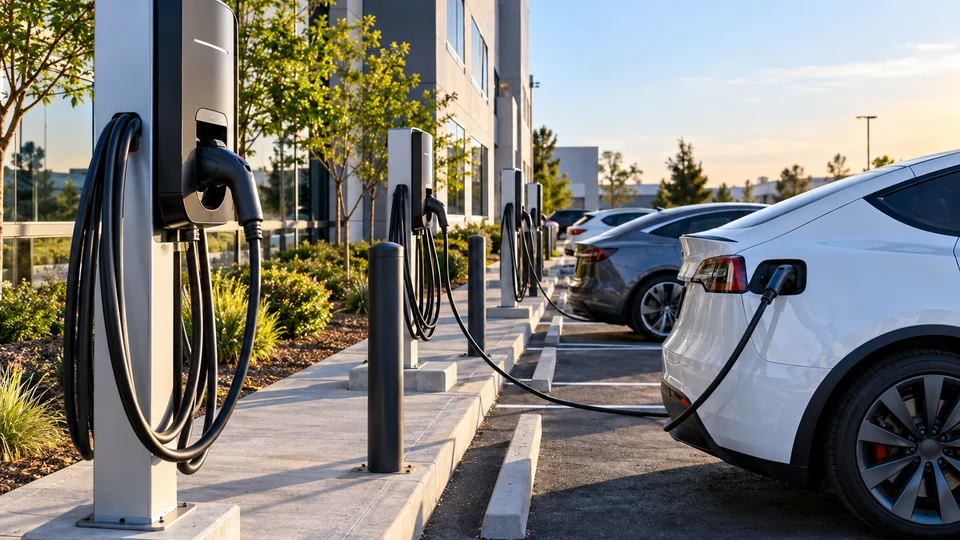
Spokane winters bring average lows of 20°F to 25°F, punctuated by severe Arctic cold fronts dropping temperatures between 0°F and -15°F. In cold weather, lithium-ion battery chemistry behaves very differently than in the summer. Understanding the physics behind winter range reduction eliminates range anxiety and informs proper charging habits.
When cold weather strikes the Inland Northwest, EV range is impacted by three distinct mechanical and electrochemical factors rather than any permanent battery damage:
Leaving an EV unplugged overnight in a Spokane cold snap forces the vehicle to wake up with frozen battery cells:
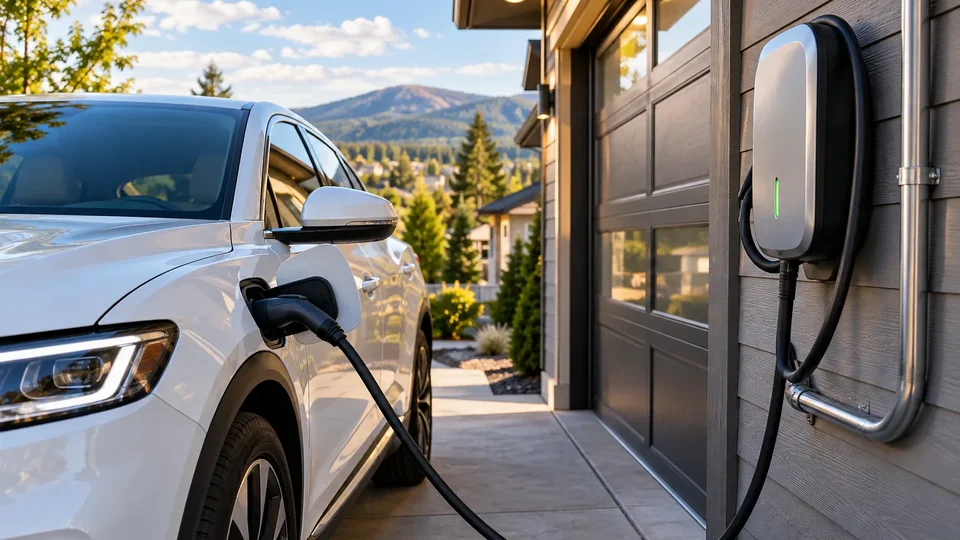
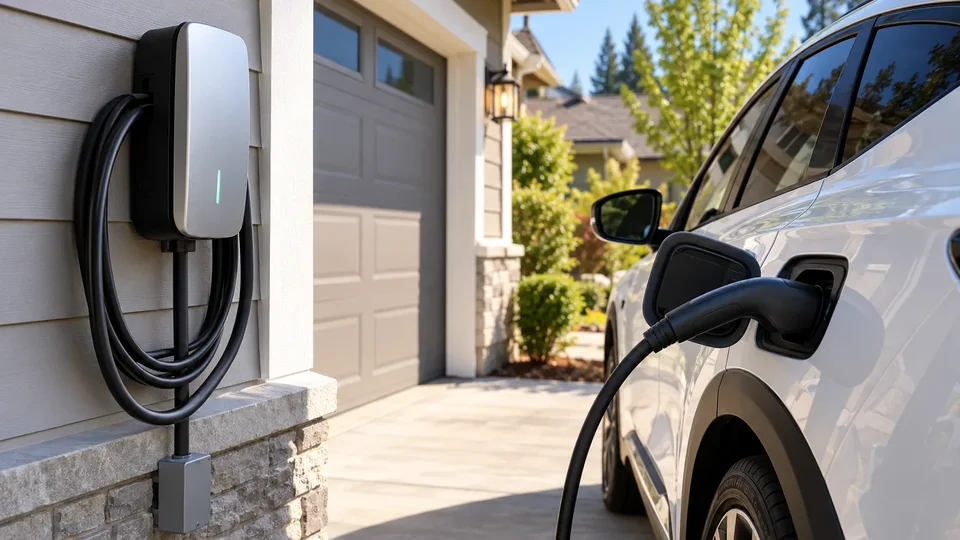
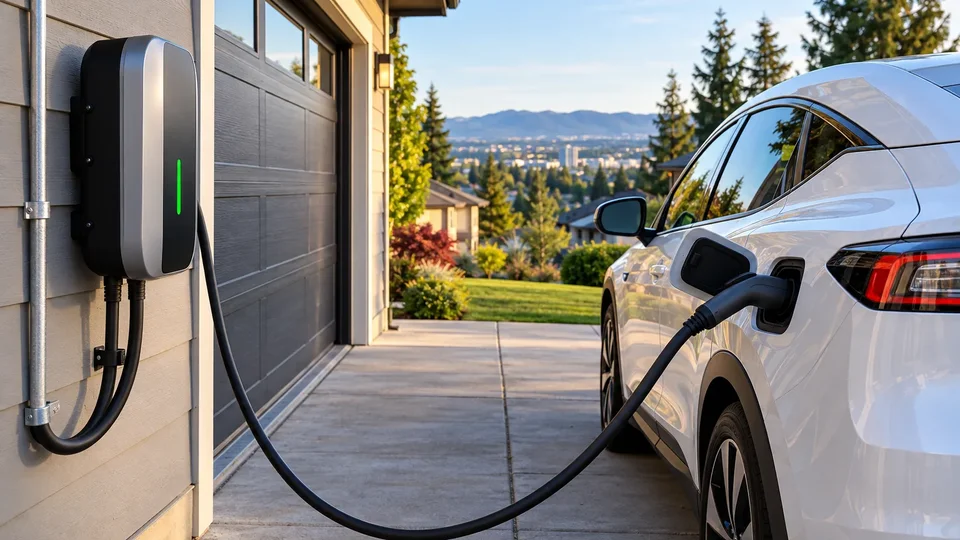
A dedicated 240V Level 2 charger transforms your winter morning driving experience:
During mild summer months, a standard 120V household wall outlet (Level 1 trickle charging) can deliver 3 to 4 miles of range per hour. In a freezing Spokane winter, that same 120V outlet frequently delivers ZERO net driving range. Here is the mathematical reality why 120V charging collapses in the cold.
When ambient temperatures fall below 25°F, your vehicle's Battery Management System (BMS) cannot permit high-amperage chemical charging into frozen cells. It must first activate onboard resistive heaters to bring the coolant and battery modules up to safe charging temperature.
Here is how temperature fluctuations across Greater Spokane impact real-world driving range, 120V vs. 240V charging speed, regenerative braking availability, and climate heating loads.
| Ambient Temperature | Range Retention | Level 1 (120V 12A) Net Gain | Level 2 (240V 48A) Net Gain | Regenerative Braking Status | Cabin Heating Power Draw |
|---|---|---|---|---|---|
| 70°F (Optimal Baseline) | 100% (300 mi) | +4.0 mph (Normal) | +40 mph (Full Rate) | 100% Full Regen | 0 kW (Passive Fan / Vent) |
| 45°F to 55°F (Late Autumn) | 92% – 95% (280 mi) | +3.5 mph | +38 mph | 90% – 100% Normal | 1.0 kW – 1.5 kW (Mild Heat) |
| 32°F (Freezing Mark) | 80% – 85% (250 mi) | +2.0 mph (Slowed) | +36 mph | 70% – 80% Restricted | 2.5 kW – 3.5 kW (Heat Pump) |
| 15°F to 20°F (Spokane Normal Jan) | 70% – 75% (220 mi) | +0.5 to +1.0 mph (Trickle) | +34 mph | 40% – 60% Heavy Limit | 4.0 kW – 5.5 kW (PTC Elements) |
| 0°F to -15°F (Severe Arctic Blast) | 60% – 65% (185 mi) | 0.0 mph (Heater Only) | +30 mph (Active Heat) | 0% – 20% Disabled | 6.0 kW – 7.5 kW (Full PTC Max) |
When Arctic polar vortex storms sweep down from British Columbia through the Spokane Valley, overnight lows regularly dip below zero. During these cold snaps, an EV that is connected to a dedicated 240V Level 2 circuit will cycle its thermal heaters autonomously to preserve pack integrity.
Preconditioning is the single most powerful tool for winter electric vehicle driving. By programming your vehicle to pre-heat while still connected to your 240V Level 2 home charger, the energy needed to warm a frozen battery pack comes directly from the Avista electrical grid rather than your car's driving range.
Warming an ice-cold battery and defrosting frozen windows requires an enormous amount of power—roughly 5 to 7 kilowatt-hours of electrical energy during the first 20 minutes of driving. If you drive away cold, that energy is ripped directly out of your driving range.
Conductive heated seats and steering wheels consume only 50 to 100 watts of power, compared to 3,000 to 5,000 watts for forced-air cabin climate blowers. Lowering the cabin setpoint to 68°F and relying on seat heaters saves up to 15% driving range.
Every 10°F drop in ambient temperature reduces tire pressure by 1 PSI. Cold Spokane weather can drop tire pressure by 4 to 6 PSI, dramatically increasing rolling resistance. Keep winter tires inflated to manufacturer cold specs to maximize range.
Enabling "Chill Mode" or "Snow Mode" softens rapid accelerator pedal response. This prevents wheel slip on iced Spokane arterials (like 29th Avenue or Maple/Ash Couplet) while smoothing amperage draw to boost winter mileage.
Low-cost, budget-grade EV chargers frequently turn into brittle plastic hazards during Eastern Washington winters. Stiff PVC cables freeze rock-solid like steel pipes at 15°F, and cheap outdoor enclosures fail to prevent windblown driving snow from shorting internal electronic boards. We install only industrial-rated cold-weather hardware.
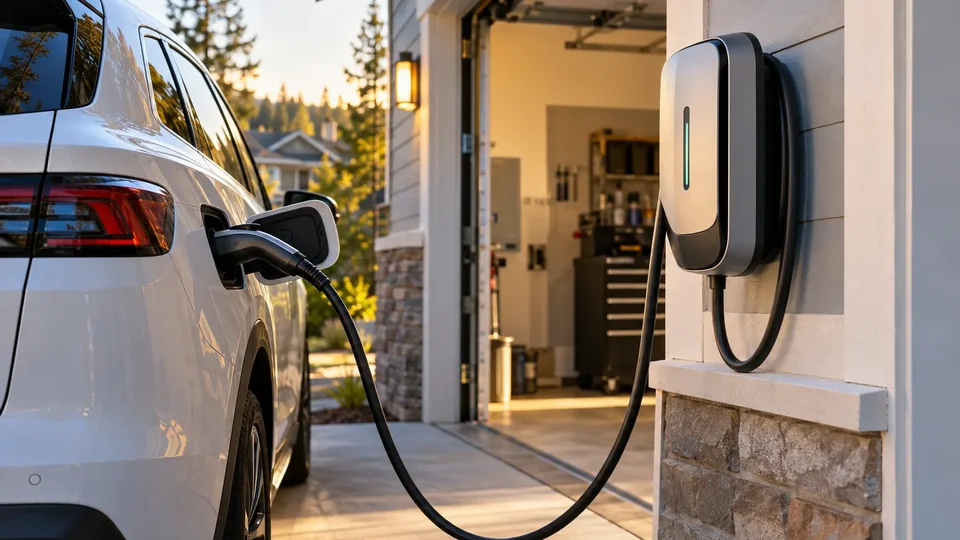
When installing an EV charging station in Spokane—especially on an exterior wall, carport, or uninsulated garage—specific hardware ratings are mandatory to ensure safety and longevity:
Many homes in classic Spokane neighborhoods—such as South Hill, Emerson-Garfield, and Spokane Valley—feature detached garages accessed via unpaved back alleys or open carports. Delivering reliable high-voltage power in sub-zero conditions requires specialized cold-climate electrical engineering.
Installing an EV circuit to a detached garage or outdoor pedestal requires strict adherence to Spokane County frost-depth and weatherproofing electrical codes:
Inland Northwest winter storms often transition between freezing rain, wet slush, and powdery snow. If moisture enters charge port pins or freezes the motorized latch mechanism, you can find yourself unable to connect or disconnect your charging cable.
Preventing ice contamination protects your vehicle's high-voltage charging receptacle and eliminates stressful morning delays:
Configure routine departure timers in your Tesla, FordPass, or Bluelink mobile app to automate winter warming.
Keep a magnetic silicone snow hood in your vehicle for outdoor charging in active blizzard conditions.
Stow a portable 240V/120V mobile charging bundle and NEMA 14-50 adapter in your trunk for winter mountain travel.
Fill with -20°F rated de-icing washer fluid to keep windshields clear of road salt spray without draining battery heat.
Navigating winter corridors across Eastern Washington, Northern Idaho, and Western Montana—including Snoqualmie Pass, 4th of July Pass, and Lookout Pass—requires strategic battery thermal planning.
When taking winter road trips out of Spokane, cold battery chemistry affects DC fast charging speeds just as it impacts driving range. Follow these master electrician field recommendations:
We evaluate panel capacity, heating loads, and identify optimal frost-protected cable runs in your garage or carport.
We pull official City of Spokane or County electrical permits engineered to Washington State cold-weather standards.
We trench below Spokane's 24-inch frost line or run heavy EMT conduit with expansion joints to handle ground freeze.
We mount your NEMA 4 waterproof charging station at elevated height with weather-sealed industrial connections.
We configure your smartphone application, test Wi-Fi signal, and program automated morning departure schedules.
We coordinate city safety inspection for Green Tag approval and submit your paperwork for Avista utility rebates.
Expert electrical answers to common questions about sub-zero winter EV charging, battery preconditioning, and cold-weather resilience in Spokane, WA.
📞 Speak with a Master Electrician