WA Licensed (01) Electrical Contractor Β· Lic #EC-SPOKEV*821JA
Serving All 30 Spokane Neighborhoods & Spokane Valley (509) 800-4136
β€’ LICENSED WASHINGTON (01) MASTER ELECTRICIANS

EV Charger Electrician Spokane WA

Licensed Washington State (01) General Electrical Contractor. Specializing in high-amperage continuous duty EVSE circuits, NEC Article 220 load calculations, 200A panel upgrades, and turnkey Avista rebate sign-offs.

  • βœ“
    Washington (01) General Electrical License: Bonded, insured, and certified for both residential and commercial high-voltage wiring.
  • βœ“
    NEC Article 625 Precision: Continuous load engineering with mandatory 125% ampacity buffers on all breakers and conductors.
  • βœ“
    Digital Calibrated Torquing: Every terminal lug tightened with certified inch-pound torque tools to prevent electrical fire arcing.
  • βœ“
    Turnkey Municipal Permitting: City of Spokane, Spokane Valley, and WA L&I permits filed and final green tags secured.
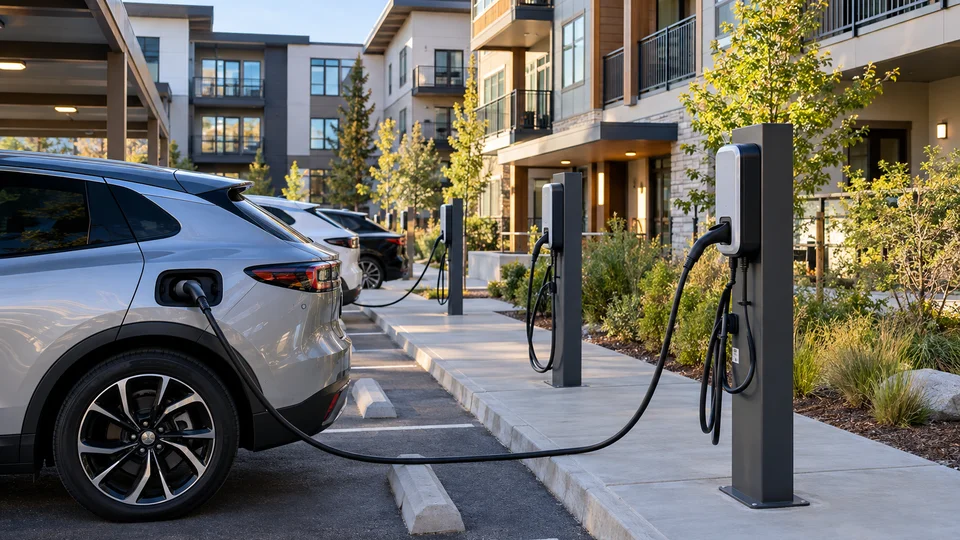
Licensed Washington master electrician installing Level 2 EV charging station in Spokane WA
⚑
WA Lic #EC-SPOKEV*821JA: Fully bonded, insured master electrician craftsmanship.

Request Professional Panel Assessment

Formal NEC Article 220 load calculation & certified estimate.
πŸ”’ Washington Licensed Electrical Contractors Β· Direct Craftsmanship
πŸ›‘οΈ
WA (01) Electrical Contractor Lic #EC-SPOKEV*821JA Β· Bonded & Insured
βš™οΈ
NEC 625 Compliance Continuous 125% Buffer & Calibrated Torque
⚑
Avista Rebate Assistance Schedule 77 Compliance Documentation
πŸ›οΈ
Municipal Permitting City of Spokane & WA L&I Inspections

Professional EV Charger Electrical Contracting in Spokane, WA

Installing a dedicated residential or commercial electric vehicle supply equipment (EVSE) circuit is fundamentally different from adding a standard household branch circuit. Unlike intermittent domestic electrical loads such as microwave ovens or power tools that run for minutes at a time, a Level 2 electric vehicle charging station represents a high-amperage continuous load that pulls continuous current for five to twelve hours without interruption.

The NEC Article 625 Continuous Duty Mandate

Under National Electrical Code (NEC) Article 625, any load running continuously for three hours or more must be engineered with an uncompromised 125% safety margin on branch circuit conductors, overcurrent protection devices, and electrical distribution hardware.

Whether retrofitting an early 1900s Craftsman bungalow in Browne's Addition, a mid-century rancher in Shadle Park, or modern new construction along the Five Mile Prairie bluff, home electrical systems present radically distinct challenges. Navigating these challenges safely demands a licensed, bonded, and insured Washington State (01) General Electrical Contractor who understands regional building stock, utility requirements, geological trenching realities, and municipal safety codes.

  • βœ“
    Whole-Home Load Profiles: Executing formal NEC Article 220 calculations to ensure your main panel will never overheat.
  • βœ“
    Municipal Permitting Handling: Filing permits with the City of Spokane Development Services Center and WA State L&I.
  • βœ“
    Cold-Weather Engineering: Sizing conduits and hardware to withstand Spokane's sub-zero winter blasts and summer heat waves.
Spokane electrical contractor installing NEC Article 625 continuous duty EV charger circuit
Master electrician routing high-amperage continuous duty conductors inside a modern residential electrical panel.

The Hazards of Unlicensed Handyman Installations

Attempting to treat an EV charger installation as an informal weekend project or hiring an uncertified general handyman creates severe hazards:

  • !
    Electrical Fire Risks: Loose terminal terminations under continuous 40A draw heat to over 300Β°F, melting plastic housings and igniting framing studs.
  • !
    Voided Homeowner Insurance: If an unpermitted branch circuit causes property damage, insurance carriers can legally deny claims based on uncertified work.

Contractor Direct Accountability

As a licensed Washington electrical contractor, our work carries full legal accountability:

  • βœ“
    Direct Licensing: Washington State General Electrical Contractor License #EC-SPOKEV*821JA.
  • βœ“
    Pass-or-Free Inspection Guarantee: Every installation is certified to pass municipal building inspector walkthroughs on the first visit.

Why Specialized EVSE Expertise Matters for Your Spokane Property

Continuous high-current cycling introduces thermal stresses that standard residential wiring rarely encounters. When an electric vehicle charges at 32, 40, or 48 amps over eight hours, electrical resistance generates substantial thermal buildup at every terminal connection, wire splice, and breaker bus stab.

Calibrated Inch-Pound Torquing Prevents Thermal Runaway

Without precise terminal torque verification using calibrated inch-pound torque tools, loose terminations rapidly experience thermal runaway, melting plastic receptacle faceplates, scorching breaker panels, and sparking interior wall fires.

Specialized EV electrical contractors bring critical technical advantages to every installation:

  • βœ“
    NEC Article 625 Sizing: Sizing continuous circuits with mandatory 125% ampacity buffers to prevent chronic breaker tripping and conductor insulation degradation.
  • βœ“
    Advanced Dynamic Load Shedding: Integrating smart energy monitors (DCC-9 or Wallbox Power Boost) allowing Level 2 charging on older 100A panels without service drop replacements.
  • βœ“
    Manufacturer-Certified Standards: Executing commissioning procedures for Tesla, ChargePoint, Emporia, and Autel units including Wi-Fi pairing and phase rotation checks.
Electrician using calibrated digital torque screwdriver on EV charger terminal lugs
Certified electrician applying precision manufacturer torque (inch-pounds) to high-gauge copper conductor lugs.

Washington State Electrical Licensing & Contractor Verification

In Washington State, electrical work is strictly regulated to protect public safety and property. Property owners must understand the licensing hierarchy when hiring a tradesperson to work on high-voltage electrical panels.

General Electrical Contractor (01)

Comprehensive State Licensing

Licensed for all residential, commercial, industrial, and high-voltage electrical installations. A licensed 01 contractor can legally perform 400A service upgrades, commercial fleet depots, subpanels, and residential EV charging.

Residential Specialty Contractor (02)

Residential Structures Only

Restricted strictly to single-family dwellings, duplexes, and multi-family structures up to four stories. An 02 contractor can install home chargers but cannot execute commercial fleet charging or three-phase switchgear projects.

Certified Journey-Level Electrician (01)

8,000+ Documented Hours

The individual technician on site must possess an active journey-level electrical certificate issued by Washington L&I, demonstrating at least 8,000 hours of supervised electrical work and technical board certification.

Requirement Criteria State Mandate (RCW 19.28 / WAC 296-46B) How to Verify in Spokane
Active Contractor License (01 or 02) Mandatory for any high-voltage electrical work Search the public Washington L&I Verify Database
Continuous Surety Bond ($4,000 min) Guarantees state and consumer financial protection Confirm active surety bond file on record with WA L&I
General Liability Insurance ($1,000,000+) Protects homeowner property against structural loss Request active Certificate of Insurance naming property owner
Designated Electrical Administrator Ensures all projects meet code engineering standards Verify licensed master electrical administrator on staff
Spokane Business License Endorsement Municipal registration for city commercial operations Confirm active City of Spokane business registry endorsement

Comprehensive Electrical Load Calculations & Panel Assessments

Before recommending an EV charger model or running conduit, an electrician must determine whether your home's existing service entrance can support an additional 32-amp to 48-amp continuous load. This determination requires a formal calculation under NEC Article 220.

The Math of Whole-Home Capacity

Spokane's diverse residential architectural landscape features service panels ranging from vintage 60-amp and 100-amp fuse/breaker boxes in pre-1950 neighborhoods to 200-amp modern distribution panels in newer suburban subdivisions.

  • βœ“
    General Lighting Load: 3 volt-amps (VA) per square foot of living area.
  • βœ“
    Small Appliance & Laundry: 1,500 VA for each kitchen and laundry branch circuit.
  • βœ“
    Fixed Appliances: Nameplate wattage for electric water heaters, ranges, and clothes dryers.
  • βœ“
    HVAC Non-Coincident Loads: Comparing central AC compressors against electric heat pumps and electric resistance heaters.
  • βœ“
    125% EVSE Addition: A 48A charger (11,520W) multiplied by 1.25 adds 14,400 VA directly to total load without diversity deductions.
Master electrician performing comprehensive whole-home load calculation on 200A panel
Master electrician performing NEC Article 220 service entrance audit on 200A residential panel.
Existing Main Service Typical Spokane Home Age Unallocated Capacity EVSE Feasibility & Recommended Solution
60-Amp Fuse / Breaker Pre-1950 (Browne's Addition / Peace) Near Zero (Maxed by lights & fridge) Direct install prohibited; mandates 200A modernization
100-Amp Main Breaker 1950–1975 (Shadle, Garland, Perry) Tight with AC, dryer, electric heat 16A–24A viable; 40A/48A requires DCC-9 load shedder
125-Amp / 150-Amp 1970–1985 (North Side / Spokane Valley) Moderate (30–45 amps continuous headroom) 32A Level 2 viable; 48A requires formal load calculation
200-Amp Main Breaker Post-1985 (South Hill / Five Mile) Generous (60–100 amps spare capacity) Full 48A continuous / 60A circuit installs cleanly
400-Amp (320A Split) Luxury & Estate properties Substantial (High multi-vehicle headroom) Dual 48A high-speed chargers accommodated easily

Breaker Sizing, Conductor Selection & Overcurrent Protection

Correctly coordinating circuit breakers, wire gauges, and conduit types is paramount to preventing thermal overload and ensuring compliance with NEC Article 310, NEC Article 240, and NEC Article 625.

The #6 Romex Derating Danger (NEC 334.80)

One of the most frequent code violations discovered during municipal electrical inspections in Spokane is the improper pairing of standard #6 Non-Metallic Sheathed Cable (NM-B / Romex) with a 60-amp circuit breaker for a 48-amp EV charger.

Under NEC Article 334.80, NM-B cable must be sized using the 60Β°C ampacity column of NEC Table 310.16. In the 60Β°C column, #6 AWG copper has an allowable ampacity of exactly 55 amperes. When feeding a 48-amp EV charger that demands a 60-amp breaker, using #6 Romex violates national code and creates severe fire risks during multi-hour charging sessions.

  • βœ“
    Code Compliant Romex: To use NM-B cable on a 60A breaker, the electrician must step up to heavy #4 AWG NM-B copper.
  • βœ“
    Code Compliant Conduit: Running individual #6 AWG THHN copper conductors inside EMT conduit safely utilizes the 75Β°C terminal rating column (rated for 65A).
Dedicated 60-amp circuit breaker and heavy-gauge copper conductors in metal EMT conduit
#6 THHN copper conductors routed in metal conduit to dedicated 60A double-pole breaker.
Max Output (kW) Continuous Draw Breaker Size Min NM-B Romex Gauge Min THHN Conduit Gauge Typical Miles / Hour
3.8 kW 16 Amps 20 Amp #12 AWG Copper #12 AWG Copper 12 – 15 mph
5.7 kW 24 Amps 30 Amp #10 AWG Copper #10 AWG Copper 18 – 22 mph
7.7 kW 32 Amps 40 Amp #8 AWG Copper #8 AWG Copper 25 – 32 mph
9.6 kW 40 Amps 50 Amp #6 AWG Copper #8 AWG Copper 30 – 38 mph
11.5 kW 48 Amps 60 Amp #4 AWG Copper (Required) #6 AWG Copper in EMT 40 – 46 mph
19.2 kW 80 Amps 100 Amp Prohibited (NM-B) #3 AWG Copper in Conduit 60 – 75 mph

Hardwired vs. NEMA 14-50 Plug-In Installations: Electrician Analysis

When planning your charging station, a key technical decision is whether to install a permanently hardwired wall connector or a plug-in 240-volt receptacle.

Alternative Option

Plug-In NEMA 14-50

Receptacle outlet with detachable charging plug

1
Main Service Panel 50A dual-pole GFCI breaker mandatory ($130–$180)
2
Wiring Run #6 AWG Copper Romex / Conduit Run
3
Industrial Hubbell HBL9450A Receptacle Heavy-duty commercial brass contacts
4
Portable Plug-In EVSE
  • Capped at 40A Max (9.6 kW) — 30 miles/hr
  • Risk of Dual-GFCI Clash & false tripping
  • Mechanical wear points on plug blades

Site Complexity: Detached Garages, Rock Trenching, and Subpanels

In Spokane's historic and semi-rural neighborhoods, vehicle parking is frequently located in detached garages, post-frame carriage houses, or dedicated parking pads situated 50 to 200 feet away from the main home's electrical service entrance.

The Spokane Basalt Rock Trenching Reality

Across Spokane's South Hill, the Five Mile and Nine Mile bluffs, and parts of Spokane Valley, excavators immediately encounter the Columbia River Basalt Groupβ€”dense, volcanic bedrock situated mere inches beneath the topsoil.

  • βœ“
    NEC 300.5 Burial Depths: Schedule 80 PVC requires 18 inches of cover; Rigid Metal Conduit (RMC) allows 6 inches over solid basalt shelves.
  • βœ“
    Voltage Drop Upsizing (NEC 210.19): Runs exceeding 100 feet are upsized to #4 AWG or #3 AWG copper to keep voltage drop below 2%.
  • βœ“
    NEC Article 225 Subpanels: Installing a 60A–100A subpanel with 4-wire isolated neutral/ground buses and dual 8-foot copper ground rods.
Detached garage electrical subpanel installation with dual grounding electrodes in Spokane
Detached garage subpanel installed with isolated neutral bus and dual copper grounding electrode rods.

Navigating Spokane Permitting Jurisdictions: City vs. Valley vs. L&I

Electrical work in the Spokane metropolitan area is governed by distinct municipal and state enforcement agencies. Securing the correct permit before work begins is legally required under Washington law.

City of Spokane

Development Services Center

808 W Spokane Falls Blvd. Under SMC 17F.050.020, mandatory electrical branch circuit permits are submitted digitally and verified by city electrical inspectors.

City of Spokane Valley

Building & Permitting Division

10210 E Sprague Ave. Operates independent municipal plan review and inspections enforcing regional Washington amendments to the NEC.

Washington State L&I

Spokane County Field Office

901 N Monroe St, Suite 100. Enforces electrical code compliance across unincorporated Spokane County (Liberty Lake, Mead, Colbert, Nine Mile Falls) under WAC 296-46B.

Avista Utilities Rebates, Incentives, and Contractor Alignment

Avista Utilities supplies electric power throughout Spokane County. Homeowners and commercial facility operators can offset up to $1,000 of their installation costs through Schedule 77 programs.

Rebate Category Maximum Incentive Eligible Equipment Criteria Electrician Contractor Requirements
Residential Standard Level 2 Up to $500 ENERGY STAR, Wi-Fi smart connected EVSE (ChargePoint, Autel, Emporia) Licensed WA 01/02 electrical contractor; finalized municipal permit
Residential Income-Qualified Up to $1,000 (100% of cost) Approved smart Level 2 connected charging equipment Licensed contractor invoice; finalized municipal permit
Multi-Family / HOA Stations $2,000 – $4,000 per connector Dual-port smart networked stations (OCPP compliant software) Commercial plan review & closed municipal permit inspection
Commercial Fleet Make-Ready Up to $10,000+ per port site Fleet managed Level 2 & 480V DC Fast Charging hardware Utility load study, site engineering, and transformer coordination

Documentation Handled for Rebate Approval

  • βœ“
    Itemized Contractor Invoice: Detailed labor, materials, and charger model separating panel scope.
  • βœ“
    Signed Permit Inspection Certificate: Official final approval from City of Spokane or WA L&I.

Washington State Sales Tax Exemption

  • βœ“
    RCW 82.08.816 Exemption: 100% sales tax exemption on EVSE equipment and certified installation labor.
  • βœ“
    Direct ~9.0% Savings: Saves $100 to $350 automatically applied on your contractor invoice.

Spokane Winter Climate Engineering & Cold-Weather Resilience

Winter weather data from NOAA Felts Field documents consistent sub-freezing daytime highs from late November through February, with overnight lows plunging between -10Β°F and 5Β°F.

Why Higher Amperage is Essential in Spokane

When an EV battery cold-soaks in an unheated garage at 10Β°F, the vehicle's internal coolant heater draws between 3,000 and 6,000 watts simply to heat the pack to 45Β°F before accepting full charge.

Battery Cold-Soaking Dynamics
  • βœ“
    Internal cell resistance surges in sub-zero cold.
  • βœ“
    Vehicle diverts 3–5 kW of energy to battery heating.
  • βœ“
    16A/24A circuits struggle to add net driving range.
Hardware Resilience
  • βœ“
    TPE rubberized cables stay flexible to -40Β°F.
  • βœ“
    NEMA 4X enclosures prevent snow and ice wedging.
  • βœ“
    Conduit expansion slip joints prevent frost heave cracking.
Sub-zero cold-weather EV charging preconditioning station in Spokane Washington winter
Level 2 charger powering scheduled cabin preconditioning and battery pack heating during freezing winter storm.

The Professional 5-Stage EVSE Installation Timeline

Hiring a professional EV charger electrician involves a systematic, five-stage process designed to ensure structural safety, operational reliability, and code compliance.

1

Site Assessment

Panel inspection, whole-home NEC 220 load calculation, and conduit pathway survey.

2

Permit Filing

Submitting engineering plans to City of Spokane or WA L&I digital permitting portals.

3

Rough-In & Wire

Breaker installation, surface EMT conduit hand-bending, and pulling #6 THHN copper conductors.

4

Precision Torquing

Calibrated torque screwdriver verification, DIP switch configuration, and Wi-Fi pairing.

5

Municipal Inspection

Final inspector walkthrough, green tag sign-off, and Avista Schedule 77 rebate closeout.

Digital Torque Verification & Load Testing

During Stage 4, the technician connects conductors using a calibrated torque screwdriver, tightening terminal lugs precisely to manufacturer specifications (typically 20 to 45 inch-pounds). Proper torque is critical; improper tightness accounts for the overwhelming majority of high-voltage electrical contact failures.

  • βœ“
    Line Voltage Testing: Measuring voltage drop across both 120V hot legs under full 48A continuous vehicle load.
  • βœ“
    Ground Impedance Validation: Testing low-resistance grounding loop to ensure instantaneous breaker tripping during faults.
Licensed Spokane electrician completing turnkey 5-stage EV charger installation and testing
Licensed journeyman electrician performing live digital multimeter voltage testing under full charging load.

Complete Cost Breakdown: Labor, Materials, and Upgrades in Spokane

Understanding the cost dynamics of hiring an EV charger electrician allows property owners to budget realistically and evaluate contractor estimates accurately.

Installation Scope Average Cost Range Included Components & Labor Details
Basic Short-Run Install (Panel in garage < 10 ft) $600 – $1,100 Dedicated 50A/60A breaker, EMT conduit, #6 THHN copper wire, mounting, commissioning, city permit.
Standard Garage Run (25–50 ft conduit) $1,000 – $1,800 25–50 ft conduit run through garage/crawlspace; 60A circuit; hardwired EVSE; municipal permit.
Long Run / Complex Routing (Opposite side of home) $1,700 – $2,800 75–125 ft routing through basement/attic; drywall penetrations; #4 AWG copper wire; permit.
Detached Garage with Trenching $2,500 – $4,800+ 50–100 ft trenching (dirt vs basalt); Sch 80 PVC; garage subpanel; dual ground rods.
Main Service Panel Upgrade (100A to 200A) $2,800 – $4,500 100A to 200A service replacement; meter base; grounding electrode system; Avista disconnect.
Automatic Smart Energy Monitor (DCC-9) $1,200 – $1,900 DCC-9 or Wallbox load shedder device; avoids multi-thousand dollar utility service replacement.

Critical Questions to Ask an Electrician Before Hiring in Spokane

When interviewing prospective electrical contractors in Spokane, asking targeted technical questions separates generalist installers from true EVSE infrastructure specialists.

Question for Contractor What You Want to Hear (Positive Indicator)
1. "Are you a licensed 01 General Electrical Contractor in Washington?" "Yes, our WA L&I license is active under 01, and certified journey-level electricians execute the work."
2. "Will you perform a formal NEC Article 220 load calculation?" "Yes, we evaluate your panel, HVAC, water heater, and cooking loads to verify continuous headroom."
3. "Do you pull the electrical permit under your contractor license?" "We pull all permits under our contractor license and coordinate the municipal inspector sign-off."
4. "For a 48A charger, what wire type and breaker will you specify?" "#6 THHN copper in EMT conduit or #4 NM-B copper. We never use #6 Romex on a 60A breaker."
5. "If installing a NEMA 14-50 outlet, what brand receptacle do you install?" "Industrial-grade Hubbell HBL9450A or Bryant receptacle paired with an approved 50A GFCI breaker."
6. "Do you use a calibrated torque tool on internal terminal connections?" "Always. Every terminal lug is torqued to the manufacturer's exact inch-pound specification."
7. "Will your final invoice qualify for the Avista Schedule 77 rebate?" "Yes, our itemized invoice and finalized permit meet all of Avista's audit criteria."

Troubleshooting & Upgrading Existing EV Charger Circuits

In addition to new equipment installations, licensed EV electricians frequently troubleshoot, repair, and modernize existing residential charging setups that have failed or fallen out of code compliance.

Nuisance GFCI Tripping

Occurs when a plug-in EVSE clashes with an upstream GFCI breaker. Solution: Hardwiring the station directly to a standard breaker, eliminating false logic loops.

Scorched Receptacles

Caused by continuous charging on cheap $10 builder-grade outlets. Solution: Replacing wiring and installing industrial-grade Hubbell receptacles torqued to 75 in-lbs.

Summer Throttling

Caused by high line resistance in undersized wire runs inside sweltering attics. Solution: Upsizing conductor gauges to #4 AWG and rerouting away from thermal hotspots.

Dinner-Hour Overloads

Main breaker trips when EV charges while oven, dryer, and heat pump run. Solution: Service upgrade to 200A or adding a DCC-9 smart load shedder.

Frequently Asked Questions

Everything you need to know about hiring a certified EV charger electrician in Spokane, WA.

πŸ“ž Speak with an Electrician
Can any licensed electrician in Spokane install an EV charger? +
Yes, any electrician holding an active Washington State 01 (General) or 02 (Residential) electrical contractor license can legally install an EV charger. However, choosing an electrician with specialized EVSE experience ensures compliance with continuous load requirements (NEC 625), knowledge of regional Avista rebates, and expertise in smart energy management devices.
Do I need to be home when the electrician installs the charger? +
Yes, someone over the age of 18 should be present. The electrician requires access to your main electrical panel (often in a basement, utility room, or garage), must coordinate power outages during breaker installation, and will need access to your vehicle and Wi-Fi network to verify charging and smart app commissioning.
How long does a standard home EV charger installation take? +
A standard residential installation where the electrical panel is located in the garage typically takes 3 to 5 hours. More complex installations involving attic wire pulls, crawlspace routing, service panel upgrades, or outdoor trenching require 1 to 2 full workdays.
Why can't I just use a regular 120-volt household wall outlet (Level 1)? +
Standard 120-volt household outlets deliver only 1.4 to 1.9 kW of power, recovering just 3 to 4 miles of driving range per hour. In a Spokane winter, when lithium-ion batteries cold-soak, virtually all 120-volt power is consumed by battery pack warming heaters, resulting in almost zero net range gain overnight. A 240-volt Level 2 circuit installed by an electrician delivers 7.7 to 11.5 kW, fully replenishing battery packs in 6 to 10 hours.
Will installing an EV charger void my home insurance policy if done without a permit? +
Operating unpermitted, non-code-compliant high-voltage electrical work can jeopardize insurance claims. If an electrical fire originates from an unpermitted EV charger circuit or uncertified installation, insurance adjusters can deny coverage based on illegal, uninspected electrical modifications. Always require your electrician to secure a municipal permit and final inspection.
Does Avista require a smart connected charger to qualify for rebates? +
Under current Avista Schedule 77 residential EVSE rebate guidelines, qualifying charging stations must be ENERGY STAR certified and include Wi-Fi or cellular connectivity to enable future grid-balancing and off-peak charging programs. A licensed electrician can provide a list of currently approved charger makes and models.

Connect with Licensed Spokane EV Electrical Specialists Today

Planning a reliable home or commercial EV charger installation begins with professional electrical advice. Sizing continuous high-power circuits, balancing panel capacities, trenching across regional basalt terrain, and navigating local municipal permitting require tradespeople committed to safety and precision.

  • βœ“
    Direct Contractor Licensing: Washington State General Electrical Contractor License #EC-SPOKEV*821JA.
  • βœ“
    Service Coverage: City of Spokane, Spokane Valley, South Hill, Liberty Lake, Mead, Colbert, and Spokane County.
  • βœ“
    Rebate & Permit Assistance: Complete municipal permit filing and Avista Schedule 77 documentation.
πŸ“ž Call (509) 800-4136 Today

Schedule an On-Site Electrical Audit

Direct scheduling with our licensed Spokane electrical team.

πŸ”’ Licensed, Bonded & Insured Washington (01) Electrical Contractor