WA Licensed (01) Electrical Contractor · Lic #EC-SPOKEV*821JA
Serving All 30 Spokane Neighborhoods & Spokane Valley (509) 800-4136
• LICENSED WASHINGTON (01) ELECTRICAL CONTRACTORS

EV Charger Installation Cost Spokane WA

Real 2026 price guide for residential & commercial EV charging stations. Transparent estimates for Level 2 units, Tesla Wall Connectors, panel upgrades, detached garages, and Avista utility rebates.

  • ✓
    Standard Garage Installations: Typical investments range from $550 to $1,100 for labor, materials, and city permit.
  • ✓
    Avista Schedule 77 Rebates: Save up to $500 to $1,000 on qualifying Energy Star certified smart chargers.
  • ✓
    Washington Sales Tax Exemption: 100% exempt from state & local sales tax on EVSE equipment & installation (save ~9.0%).
  • ✓
    Zero Hidden Fees: Itemized copper wire, commercial breakers, conduit, and City of Spokane inspection fees included.
Licensed electrician reviewing transparent EV charger installation estimate and electrical panel in Spokane WA
⚡
Avista Rebate Ready: Claim up to $1,000 in regional EV incentives.

Get an Itemized Spokane Estimate

Accurate pricing based on your panel capacity & garage layout.
🔒 Licensed WA Electrical Contractors · Lic #EC-SPOKEV*821JA · No Obligation
🛡️
WA Electrical Contractor Lic #EC-SPOKEV*821JA · Bonded & Insured
📋
Itemized Written Estimates 100% Transparent · Zero Surprise Fees
⚡
Avista Rebate Assistance Schedule 77 Documentation Handled
🏛️
Municipal Permitting City of Spokane & WA L&I Inspections

Real 2026 EV Charger Installation Costs in Spokane, WA

Planning to install an electric vehicle charging station at your Spokane home or commercial property is an exceptional investment that permanently unlocks the convenience, speed, and fuel savings of driving electric. Across Eastern Washington, residential installations typically range from $550 to $1,500 for standard garage setups with adequate panel capacity.

Why Pricing Varies Across Spokane County

The wide price range exists because every property in Spokane is electrically and architecturally distinct. A homeowner living in a modern 2000s suburban home on Five Mile Prairie with an unfinished garage and a modern 200-amp Square D panel will receive a vastly different installation quote than a homeowner living in a 1920s historic craftsman home on the South Hill with a detached carriage house, solid volcanic basalt rock beneath the yard, and an original 100-amp split-bus panel.

Our licensed Spokane master electricians provide transparent, itemized estimates. We evaluate your home's existing service, calculate continuous duty requirements under NEC Article 625, maximize available Avista Utilities rebates, file all municipal permits with the City of Spokane Development Services Center, and deliver certified installations with zero hidden costs.

  • ✓
    Standard Residential Garage: $550 to $1,100 (Labor, dedicated breaker, EMT conduit, #6 copper, and city permit).
  • ✓
    Intermediate Finished Routing: $950 to $1,800 (Up to 50 ft through basements, crawlspaces, or attics).
  • ✓
    Detached Carriage & Trenching: $2,200 to $4,800+ (Subpanel, subterranean trenching, rock excavation, and heavy wire).
  • ✓
    200-Amp Service Panel Upgrade: $2,600 to $4,500 (Service modernization, meter socket, surge protection, Avista coordination).
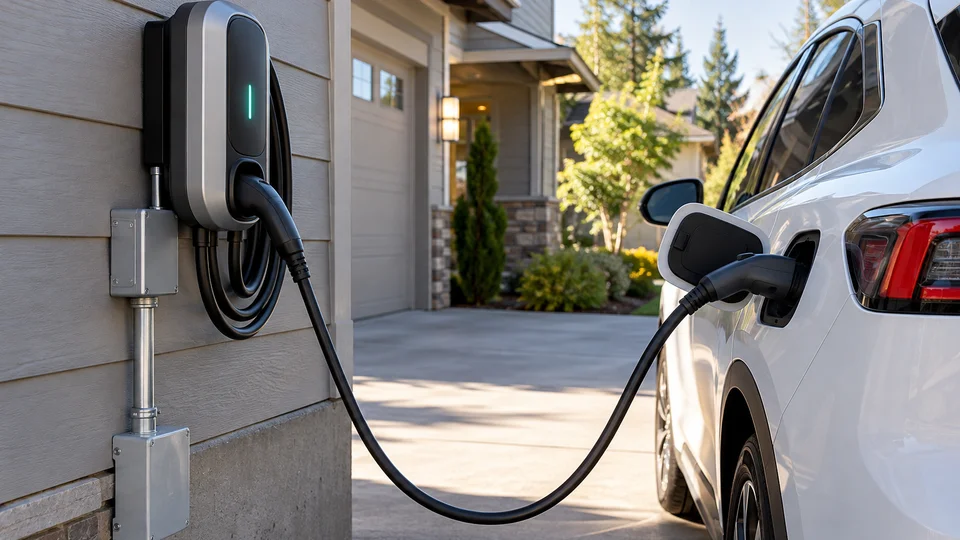
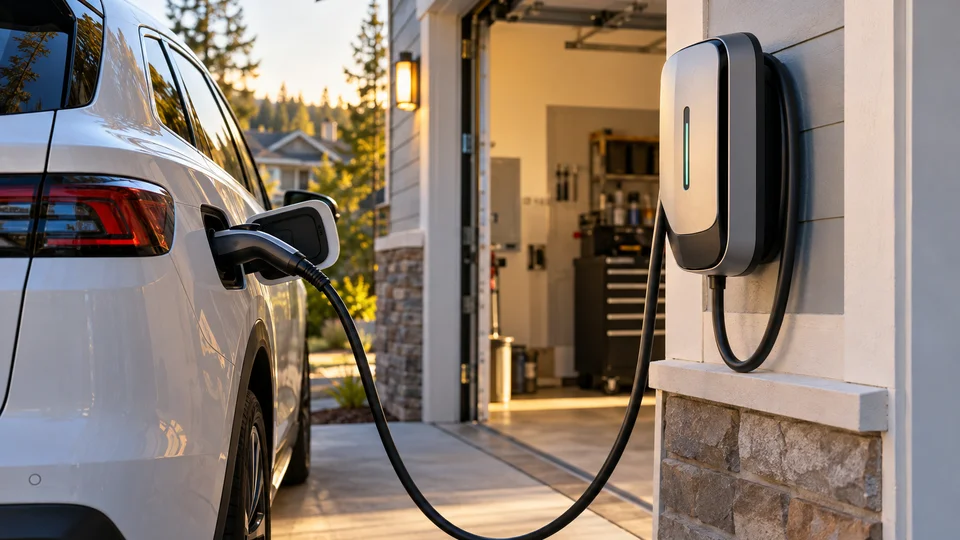
Itemized residential Level 2 EV charging station installation cost in Spokane garage
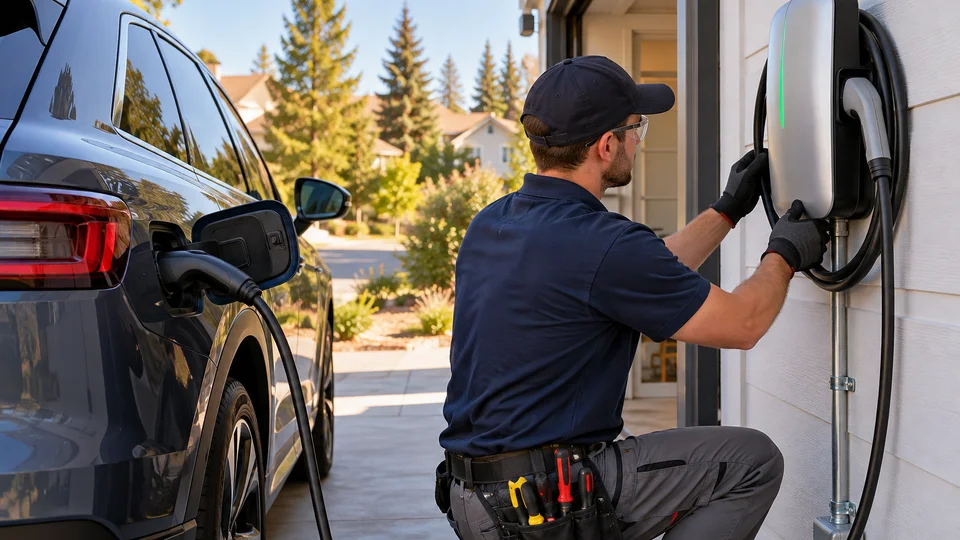
Standard residential Level 2 charging setup mounted adjacent to a 200A garage panel with surface EMT conduit.

Hardware vs. Electrical Installation

The charging station hardware itself is a separate component, typically costing between $400 and $700 for premium smart Level 2 equipment (such as the Tesla Universal Wall Connector, ChargePoint Home Flex, Grizzl-E, or Emporia Smart EVSE).

  • ✓
    Homeowner Provided: You can purchase hardware online or directly from your vehicle manufacturer.
  • ✓
    Contractor Supplied: We can provide the equipment directly on installation day, ensuring full warranty coverage and factory testing.

The Washington State Sales Tax Advantage

Under RCW 82.08.816, equipment and professional installation labor associated with electric vehicle charging infrastructure are 100% exempt from Washington state and local sales taxes.

  • ✓
    Direct 9.0% Savings: In Spokane, this statutory exemption automatically saves homeowners $100 to $350 on typical installations.
  • ✓
    Immediate Deduction: The exemption applies directly at the time of contractor invoicing without requiring complex rebate filing.

The 3 Core Price Components: Hardware vs. Labor vs. Permits

Understanding how an EV charger installation estimate is constructed prevents surprises. Every professional Spokane installation budget breaks down into three distinct financial components.

How Electrical Contractors Structure Your Quote

Rather than providing a vague lump-sum number over the phone, certified electrical contractors itemize the three primary cost drivers: equipment hardware, electrical labor and high-amperage copper materials, and municipal safety inspection fees.

Part 1 $400 – $700

EVSE Hardware

The physical Level 2 charging station mounted to your wall or pedestal.

Tesla · ChargePoint · Emporia
Part 2 $550 – $1,800+

Labor & Materials

Dedicated 240V breaker, commercial copper wiring, EMT conduit, and certified torquing.

NEC Article 625 Compliant
Part 3 $95 – $220

Municipal Permits

Official municipal building inspection fees and L&I safety sign-offs.

City of Spokane / County
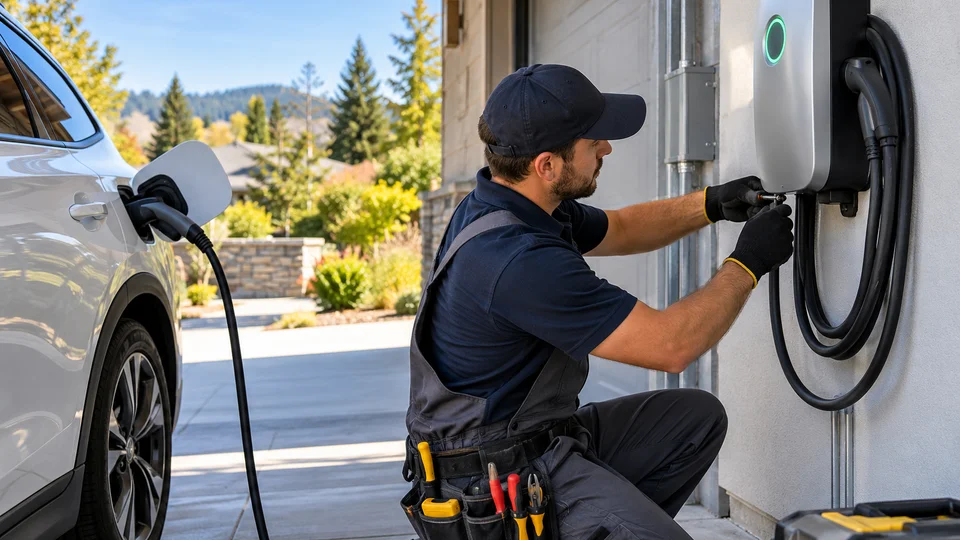
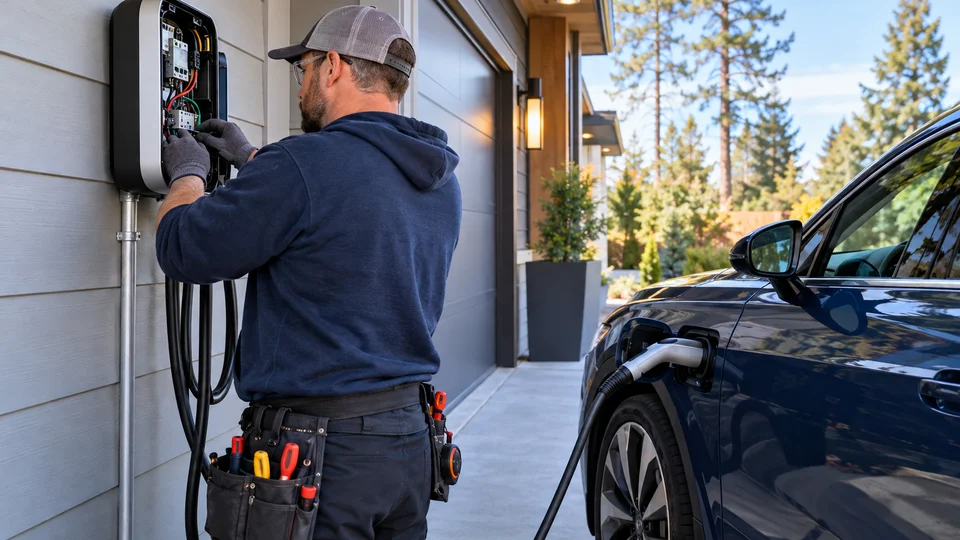
Electrician wiring dedicated 240V circuit breaker and conduit for home EV charger
Licensed journeyman electrician routing heavy-gauge copper conductors through EMT conduit into a 60A breaker.

Hardware Price Breakdown by Model (2026)

  • ✓
    Tesla Gen 3 Wall Connector ($450): Native NACS plug, 48A output, tempered glass faceplate, Wi-Fi connectivity.
  • ✓
    Tesla Universal Wall Connector ($580): Integrated J1772 Magic Dock adapter charging both Tesla and non-Tesla EVs natively.
  • ✓
    ChargePoint Home Flex ($550–$600): 16A to 50A adjustable, industry-leading smart app scheduling, sub-zero flexible cable.
  • ✓
    Grizzl-E Classic ($380–$430): Heavy cast-aluminum NEMA 4 body, rated to -40°F, non-networked commercial reliability.
  • ✓
    Emporia Smart EVSE ($390–$440): 48A hardwired, energy monitoring, automated load shedding integration.

Professional Electrical Materials Included

  • ✓
    Dedicated Circuit Breaker: Dual-pole 240V breaker (40A, 50A, or 60A) matching your panel busbar brand.
  • ✓
    Commercial Copper Conductors: #6 AWG or #4 AWG THHN copper wire rated for 90°C continuous high draw.
  • ✓
    Protective Conduit: Steel Electrical Metallic Tubing (EMT) or Schedule 80 PVC protecting wiring from physical impact.
  • ✓
    Precision Digital Calibrated Torquing: Terminal lugs torqued to manufacturer inch-pound specs to prevent thermal runaway.

Spokane Residential Cost Matrix by Installation Tier

Because property layouts and electrical panels differ across Spokane neighborhoods, installation costs fall across five distinct operational tiers.

Installation Scope Tier Typical Labor & Wire Cost Scope Details & Included Materials Spokane Neighborhood Example
Tier 1: Standard Garage
Short Conduit Run (Under 15 ft)
$550 – $1,100 Dedicated 40A–60A breaker, up to 15 ft of surface EMT conduit, #6 THHN copper wire, mounting, commissioning, and City permit. Modern suburban homes in Five Mile Prairie, Southgate, or Wandermere with panels in the garage.
Tier 2: Intermediate Run
Basement / Crawlspace (15–50 ft)
$950 – $1,800 Up to 50 ft of wiring routed through unfinished basements, crawlspaces, or attics; structural framing drilling; heavy-duty junction boxes; permit. Mid-century ranches in North Hill, Balboa, Shadle, or Town & Country with basement panels.
Tier 3: Finished Ceiling
Opposite Side of Home (50–90 ft)
$1,400 – $2,400 50–90 ft of conduit routed through finished drywall ceilings, exterior wall penetrations, surface raceways, or attic fishing; permit. Multi-level homes in Comstock, Lincoln Heights, or Spokane Valley with finished basements.
Tier 4: Detached Carriage
Underground Trenching & Subpanel
$2,200 – $4,800+ 60A–100A garage subpanel, 50–150 ft subterranean trenching, heavy conduit, large-gauge wire to prevent voltage drop, Spokane basalt excavation. Historic properties in Browne's Addition, South Hill (Manito, Cliff/Cannon), or West Central.
Tier 5: Panel Modernization
Full 200-Amp Service Upgrade
$2,600 – $4,500 New 200A exterior meter base, main disconnect, 200A interior distribution panel, whole-home surge protector, twin ground rods, Avista coordination. Older Spokane homes with 60A/100A panels, full breaker boxes, or hazardous Federal Pacific/Zinsco panels.

Wire Distance & Conduit Routing: How Geometry Dictates Your Estimate

In electrical contracting, distance equals cost. High-amperage copper electrical wire is an expensive commodity, and labor hours scale with the physical complexity of routing conduit through a building.

The Cost Per Linear Foot Breakdown ($12 to $25 / ft)

For a dedicated 50-amp or 60-amp 240V circuit, homeowners can expect electrical branch circuit routing to cost approximately $12 to $25 per linear foot for materials and professional labor combined:

  • ✓
    Heavy-Gauge Copper Wire ($4.00 – $6.50 / ft): Pulling four individual #6 AWG THHN copper conductors (two hot lines, one neutral, one ground) through conduit represents significant raw material costs.
  • ✓
    Conduit Material ($2.50 – $4.50 / ft): Steel Electrical Metallic Tubing (EMT) or rigid Schedule 80 conduit with structural fittings, couplings, and masonry anchors.
  • ✓
    Labor Intensity Factor: Routing surface conduit along bare garage wall studs takes a fraction of the time required to drill through structural floor joists in an unfinished crawlspace or snake wire through finished sheetrock ceilings.
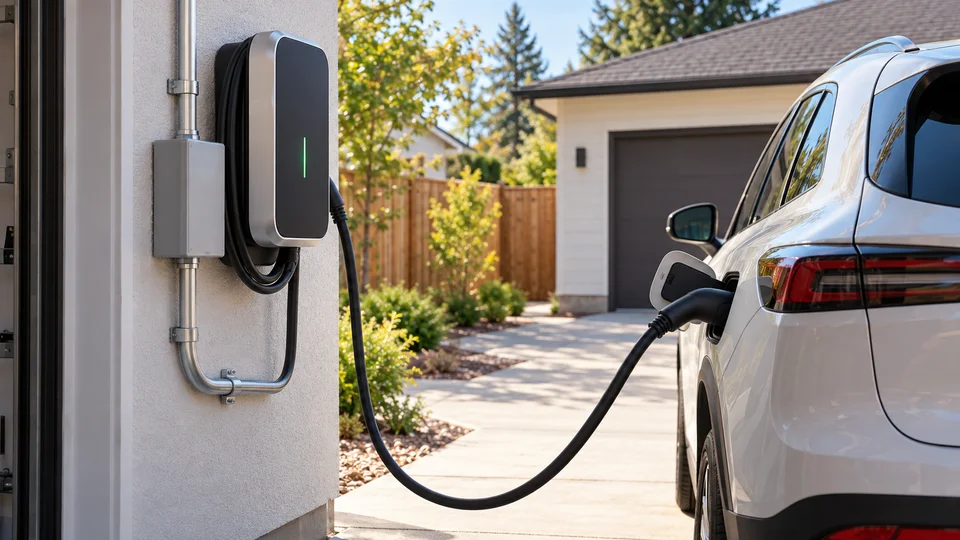
Surface-mounted EMT conduit and copper conductor routing along residential garage wall
Neat surface-mounted EMT metal conduit run routed directly from an attached garage breaker panel.

Avoiding $800 to $1,500 in Drywall Repairs

If your electrical panel is located in a finished basement on the opposite side of your house from the garage, snaking wire through finished drywall ceilings can require cutting dozens of inspection holes. Drywall patching, mudding, texturing, and repainting can easily add $800 to $1,500 to your total bill.

  • ✓
    Exterior Conduit Pathways: Running commercial-grade painted EMT conduit neatly along the exterior foundation wall beneath the siding trim saves huge interior repair costs.
  • ✓
    Attic Cable Pulls: Routing conduit up through an unfinished utility chase into the attic, traveling across trusses, and dropping down into the garage bay.

Conductor Sizing to Prevent Voltage Drop

When an EV draws 48 amps over 75 to 150 feet, electrical resistance creates line resistance that lowers operating voltage.

  • ✓
    3% Code Threshold (NEC 210.19): Voltage drop exceeding 3% slows charging times and causes circuit conductors to run hot.
  • ✓
    Upsizing to #4 AWG: For runs exceeding 65 feet, our electricians calculate exact resistance and upsize conductors to #4 AWG copper to preserve maximum 11.5 kW charging speed.

Electrical Panel Capacity: The Single Biggest Cost Decider

The single largest financial variable in an EV charger installation is whether your home's main electrical service panel has adequate capacity to absorb a 40-amp to 60-amp continuous load under NEC Article 220.

Evaluating Your Main Service Panel

Before adding an EV charger, contractors calculate total whole-home electrical demand. If the home draws near service limits, adding an electric vehicle requires either upgrading service to 200 amps or adding an automated energy management system.

✓ Scenario A: Has Capacity

Modern 200A Service OR Gas Home

Homes with 200A panels or 100A panels with gas heating/dryer.

  • ✓
    No Panel Upgrade Required: Standard 60A breaker installs easily.
  • ✓
    Added Cost: $0 (Pay only for standard circuit).
! Scenario B: Overloaded

100A All-Electric Home

Homes with heat pumps, electric range, water heater, and AC.

  • ✓
    Option 1: 200A Panel Modernization ($2,600 – $4,500).
  • ✓
    Option 2: DCC-9 Smart Load Shedder ($1,200 – $1,900).
Electrician evaluating 100A vs 200A electrical service panel capacity for EV charging
Electrician measuring continuous line amperage with an inductive clamp meter during NEC 220 audit.

The Smart Alternative: DCC-9 Energy Managers ($1,200 to $1,900)

If your 100-amp panel is electrically maxed out, you do not have to spend $3,500+ on a full service panel replacement. Installing an Electric Vehicle Energy Management System (DCC-9 or SimpleSwitch) saves thousands:

  • ✓
    Real-Time Current Sensing: Sensors clamp around your main lines, reading total home power draw continuously.
  • ✓
    Automated Load Shedding: If power draw surges past 80 amps (while dryer, oven, and heat pump run), the DCC-9 automatically pauses the charger.
  • ✓
    $1,500 to $2,500 Net Savings: Completely satisfies Washington electrical safety codes while eliminating expensive utility service drop trenching.

Hazardous Obsolete Panels Requiring Immediate Replacement

Under Washington electrical safety regulations, licensed electrical contractors will not connect an EV charger to obsolete or hazardous panels:

  • ✓
    Federal Pacific Electric (FPE Stab-Lok): Documented design defects cause breakers to fail to trip under overcurrent conditions up to 60% of the time.
  • ✓
    Zinsco / GTE Sylvania Panels: Busbars melt and weld breakers to the panel interior, creating severe structural fire hazards under continuous EV loads.
  • ✓
    Fuse Boxes & Split-Bus Panels: Lack main disconnect switches and lack grounding conductors mandated for modern EV charging equipment.

Hardwired vs. NEMA 14-50 Receptacle: The Surprising Price Breakdown

A widespread misconception among EV owners on local Spokane social media groups is that installing a 240-volt NEMA 14-50 wall outlet is "substantially cheaper" than hardwiring a dedicated charging unit.

Why Hardwiring is Actually Cheaper in Circuit Hardware

When you evaluate the actual materials and code requirements mandated by Washington State electrical codes (2023 NEC 210.8), hardwiring a charging station is frequently less expensive in parts while delivering vastly superior charging performance:

  • ✓
    Eliminating the $150 GFCI Breaker: The NEC strictly mandates that all 240V receptacles in residential garages must have Class A GFCI breakers ($120–$180). Hardwired units bypass this rule, utilizing standard $25 breakers.
  • ✓
    No Expensive Industrial Receptacle ($80–$120): Cheap $10 builder-grade receptacles melt under 40A continuous draw. Commercial Hubbell receptacles add significant parts costs.
  • ✓
    45% Faster Charging Speed: Hardwired units charge at up to 48 amps continuous (11.5 kW / 44 mph) on a 60A breaker, whereas plug-in outlets are legally capped at 40 amps continuous (9.6 kW / 30 mph) on a 50A breaker.
Cost comparison between hardwired Level 2 charging station and industrial NEMA 14-50 outlet
Hardwired 48A terminal connection eliminating plug blades, GFCI breaker conflicts, and thermal points.
Component / Material Requirement Hardwired Level 2 Installation Plug-In NEMA 14-50 Receptacle Cost Difference Analysis
Circuit Breaker Cost $25 – $35 (Standard 60A Double-Pole) $120 – $180 (Class A GFCI 50A Breaker) 2023 NEC mandates GFCI breakers on garage outlets. Hardwired units save $100–$150.
Receptacle & Wall Box Cost $0 (Direct conduit entry into unit) $80 – $120 (Industrial Hubbell HBL9450A) Cheap $10 outlets melt under EV duty cycles. Industrial outlets add significant cost.
Weatherproof In-Use Cover $0 (Unit enclosure is NEMA 3R/4X sealed) $35 – $55 (Commercial heavy-duty bubble cover) Bulky 240V plug handles require deep commercial weatherproof covers.
Total Circuit Hardware Cost Base Material Baseline +$235 to +$355 in Extra Hardware The receptacle setup requires $235+ more in raw parts!
Maximum Charging Speed 48 Amps (11.5 kW / 44 miles/hr) 40 Amps (9.6 kW / 30 miles/hr) Hardwiring delivers 45% faster charging speeds every night.
GFCI Nuisance Tripping Zero Nuisance Risk High Risk (Dual GFCI Logic Clash) Hardwiring eliminates midnight charging shutoffs and uncharged morning batteries.

Detached Garages, Basalt Rock Excavation & The 24-Inch Frost Line

Detached carriage houses and alley garages are common across historic Spokane neighborhoods, including the South Hill (Manito, Rockwood, Cliff/Cannon), Browne's Addition, and West Central. Supplying power across a residential yard is a major electrical and civil project that commands a higher investment ($2,200 to $4,800+).

The 4 Primary Cost Drivers for Detached Garages

  • ✓
    Subterranean Trenching Depth (NEC 300.5): Washington State electrical codes mandate that Schedule 40/80 PVC conduit must be buried at a minimum depth of 24 inches beneath finished grade to protect wiring from vehicle traffic and seasonal frost heaves.
  • ✓
    Spokane Volcanic Basalt Rock Shelves: Along the South Hill and Five Mile Prairie, solid volcanic basalt rock lies just 4 to 8 inches beneath topsoil. Where ditch-witch trenchers fail, crews deploy hydraulic rock breakers or diamond rock saws, increasing excavation costs to $60 to $120 per linear foot.
  • ✓
    Upsizing Conductor Gauges: To keep voltage drop below the 3% code threshold across 100 to 200 foot runs, electricians upsize conductors to heavy #4 AWG copper or #2 AWG aluminum, adding $300 to $600 in raw conductor costs.
  • ✓
    Dedicated 60A to 100A Outbuilding Subpanel: Installing a subpanel ($950 to $1,500 installed) inside the detached garage powers your Level 2 charger while simultaneously adding clean circuits for garage lighting, door openers, and shop tools.
Underground conduit trenching and rock excavation for detached garage EV charger installation
Subterranean trenching across a residential yard meeting Spokane's 24-inch frost line requirement.

Spokane Municipal Permit Fees & Inspection Protocols

Under Washington State law (RCW 19.28) and Spokane Municipal Code 17F.050.020, all high-voltage EV branch circuits require an official electrical permit and on-site safety inspection.

Regional Municipal Permit Fee Schedule

Permit fees are paid directly to local municipal building authorities. Licensed electrical contractors handle all plan review filings, fee payments, and scheduling of the final inspector walkthrough:

  • ✓
    City of Spokane Development Services Center: Residential branch circuit permit fees range from $95 to $165. Full service panel upgrades range from $180 to $280.
  • ✓
    City of Spokane Valley Building & Permitting: Dedicated residential branch circuit permits range from $90 to $150.
  • ✓
    Washington Department of Labor & Industries (L&I - County): Standard residential branch circuit permits range from $110 to $220.

Severe Hazards of Non-Permitted Electrical Work

  • ✓
    Homeowners Insurance Claim Denials: If an unpermitted branch circuit overheats and causes a structure fire, insurance investigators can legally deny your entire property damage claim.
  • ✓
    Real Estate Escrow Closing Failures: Buyers' home inspectors identify unpermitted 240V circuits in garages. Sellers are forced to pay emergency electrician fees, city penalty fees, and open walls to close escrow.
  • ✓
    Voided Equipment Warranties: Tesla, ChargePoint, and Emporia warranty policies explicitly mandate installation by a certified electrician conforming to municipal permitting codes.

Avista Utilities Rebates & Washington State Clean Energy Incentives

Substantial regional, state, and federal incentives are available to offset the upfront cost of your Spokane EV charger installation.

1. Avista Utilities Electric Transportation Programs (Schedule 77)

Avista Utilities is Eastern Washington's primary electric utility provider. Under Washington's Clean Energy Transformation Act (CETA), Avista administers customer incentive programs:

  • ✓
    Residential Level 2 Rebates: Avista periodically provides customer rebates ranging between $500 and $1,000 for the installation of qualifying residential smart Level 2 charging stations.
  • ✓
    Income-Qualified Incentives: Enhanced rebates covering up to 100% of equipment and electrical installation costs are available for income-qualified households.
  • ✓
    Federal Section 30C Tax Credit: Homeowners in eligible Spokane census tracts can claim a federal tax credit equal to 30% of total hardware and installation expenses, up to a maximum of $1,000.
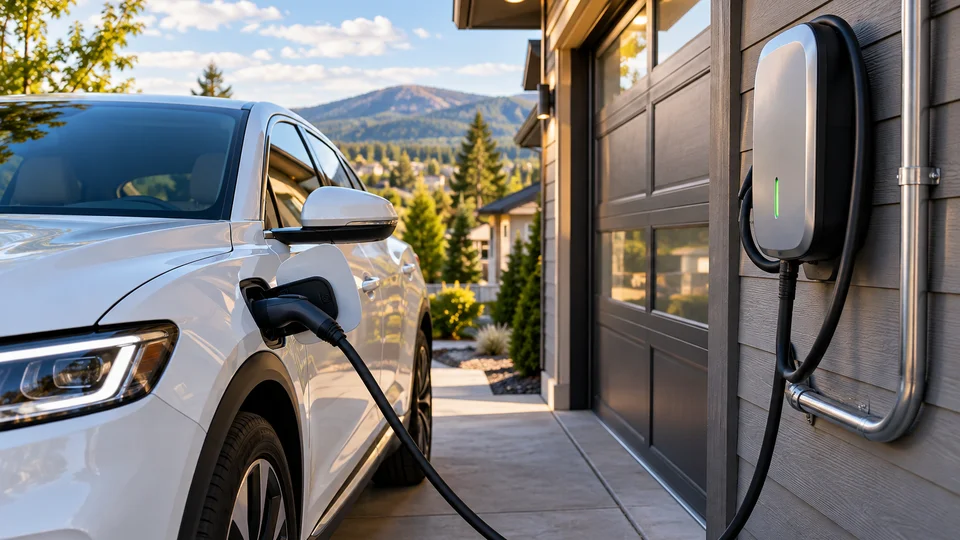
Avista Utilities Schedule 77 rebate qualified smart Level 2 home EV charger
Energy Star certified Level 2 charger qualifying for Avista Schedule 77 rebates and sales tax exemption.

How We Help You Maximize Rebate Payouts

Navigating utility paperwork can be tedious. Our team handles the documentation for you:

  • ✓
    Equipment Eligibility Verification: Ensuring your selected charger model is active on Avista's qualified products list.
  • ✓
    Itemized Contractor Invoicing: Providing properly formatted invoices separating hardware, labor, and municipal permit fees as required by Avista.

Washington State Sales Tax Exemption (RCW 82.08.816)

Direct savings applied automatically on your installation invoice:

  • ✓
    Zero State & Local Sales Tax: Saves approximately 9.0% on total project costs ($100–$350).
  • ✓
    Applies to Equipment & Labor: Covers charging stations, conduit, wiring, breakers, and installation labor.

The Real Cost of Driving Electric in Spokane: Home vs. Fast Charging vs. Gas

To evaluate the true Return on Investment (ROI) of a home EV charger installation, homeowners must examine their monthly operational fuel costs.

Fuel Cost Comparison (Driving 12,000 Miles Annually)

Assuming an electric vehicle averaging 3.3 miles per kilowatt-hour (consuming 3,636 kWh per year) compared to a typical 28-MPG gasoline vehicle:

$34.85
Monthly Home Charging
$136.35
Monthly Public Fast Charging
$137.50
Monthly Gas Fuel (28 MPG)

The Payback Horizon: A standard $1,000 home Level 2 installation pays for itself in fuel savings in less than 10 months of driving. Over five years of ownership, home charging puts over $6,000 in net savings back into your pocket.

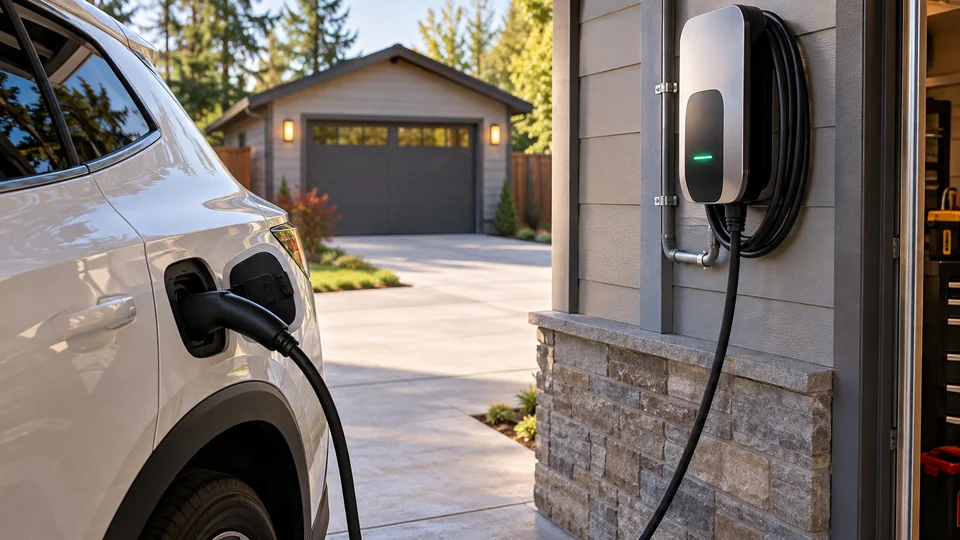
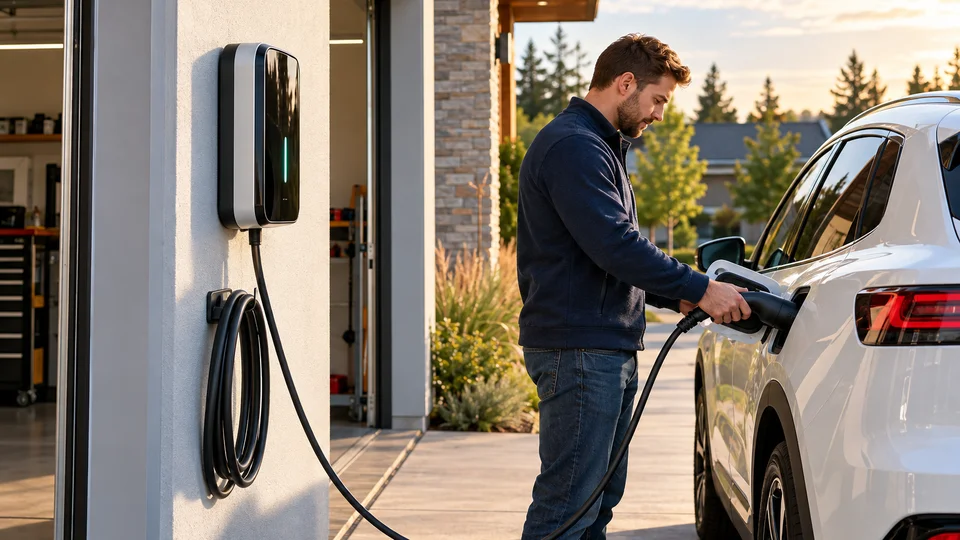
Electric car charging at home saving over 1200 dollars annually compared to gas fuel in Spokane
Overnight home Level 2 charging delivering fuel at Avista's residential rate of ~11.5¢ per kWh.
Fueling / Charging Method Average Rate in Spokane Annual Energy / Fuel Expense Monthly Cost 5-Year Total Cost
Home Level 2 Charging
Avista Residential Rate
~11.5¢ per kWh $418.14 $34.85 $2,090.70
Public DC Fast Charging
Commercial Charging Plazas
~45.0¢ per kWh $1,636.20 $136.35 $8,181.00
Standard Gasoline Vehicle
28 MPG @ $3.85 / Gallon
$3.85 / gallon $1,650.00 $137.50 $8,250.00

Comparing Contractor Estimates: What to Look For & Red Flags to Avoid

When requesting quotes from local electrical contractors, comparing bottom-line numbers alone is dangerous. An artificially cheap quote often indicates that an installer is cutting critical corners on code compliance and materials.

4 Red Flags in Artificially Cheap Quotes

  • !
    The "Sight-Unseen" Lowball Phone Quote ($300–$400): An installer cannot quote an EV charger without checking panel capacity and conducting an NEC 220 load calculation. They quote low, then demand $1,500 on site.
  • !
    Skipping the Municipal Electrical Permit: Suggesting skipping permits to "save $150" is illegal, voids homeowner insurance, and indicates the installer lacks an active Washington electrical license.
  • !
    Pulling #6 Romex on a 60-Amp Circuit: Using #6 AWG Romex (NM-B) on a 60A breaker violates code because Romex is capped at 55A (60°C column). Proper installs require #6 THHN in conduit.
  • !
    Installing a $10 Builder-Grade Receptacle: Cheap hardware-store outlets melt under continuous EV duty cycles. Professional contractors specify industrial Hubbell HBL9450A receptacles.

What a Professional Spokane Estimate Must Itemize

  • ✓
    Breaker Specification: Exact circuit breaker amperage and manufacturer brand matching your panel busbar.
  • ✓
    Conductor & Conduit Type: Exact copper wire gauge (#6 or #4 AWG) and conduit material (EMT or Schedule 80 PVC).
  • ✓
    Permit & Inspection Fees: Included municipal permit filing and coordination of final walkthrough.
  • ✓
    Calibrated Torque Verification: Lugs tightened with digital inch-pound torque tools to prevent arcing.
  • ✓
    Workmanship Warranty: Minimum 1-year to 3-year warranty on all electrical labor and materials.

Commercial & Multifamily EV Charger Installation Costs

Commercial property owners, developers, and multifamily facility managers face distinct cost structures when deploying EV infrastructure in Spokane.

Commercial Dual-Port Pedestals

$7,500 – $15,000 per pedestal installed

Includes commercial dual-port Level 2 hardware, concrete equipment pad, protective steel bollards, and city commercial plan review.

Asphalt Trenching & Boring

$45 – $120 per linear foot

Directional horizontal boring beneath active parking lots and saw-cutting asphalt trenching with subgrade repaving and restriping.

Commercial DC Fast Charging

$50,000 – $150,000+ per station

480V 3-phase DC fast charging (50 kW to 150 kW), switchgear modernization, and Avista dedicated transformer coordination.

Cloud Networking Software

$250 – $450 per port / year

Cellular gateway networking, driver RFID / mobile payment processing, and dynamic utility demand charge mitigation.

Cost Factors for Spokane Winters & Sub-Zero Freezes

Spokane's freezing winters require specifying cold-weather hardware that withstands sub-zero freezes down to -15°F without cracking or failure.

Cold-Rated Flexible TPE Cables (-40°F)

Inexpensive charging cables turn rigid and crack when temperatures drop below freezing in unheated Spokane garages:

  • ✓
    Thermoplastic Elastomer (TPE) Jacketing: Adds roughly $50 to $100 to hardware costs but remains ultra-flexible down to -40°F (-40°C).
  • ✓
    Anti-Cracking Reliability: Units like Tesla Wall Connector and ChargePoint Home Flex ensure smooth, effortless coiling in sub-zero winter storms.

Watertight Enclosures & Frost-Heave Expansion

Outdoor driveway installations face blowing snow, freezing rain, and seasonal frost heaves:

  • ✓
    NEMA 3R / NEMA 4X Enclosures: Fully weather-sealed housings prevent moisture ingress, internal terminal corrosion, and ice wedging.
  • ✓
    Conduit Expansion Slip Fittings (NEC 352.44): Telescoping expansion slip joints prevent seasonal soil frost heave from shearing conduit runs or cracking junction boxes.

Condo & HOA Charging Costs: Submetering & Shared Infrastructure

Installing charging stations in Spokane condominiums, townhomes, and communities governed by HOAs involves specialized cost and submetering configurations.

Dedicated Meter Tap Runs

$1,500 – $2,800 installed

Running dedicated conduit from an individual unit owner's electric meter down into parking garages, navigating concrete core drilling and fire barriers.

Shared Networked Stations

Automated Billing Reimbursement

Multifamily communities install shared commercial chargers where residents pay for electricity via mobile app, reimbursing the HOA bank account directly.

Dynamic Power-Sharing Clusters

Avoids $10,000+ Transformer Upgrades

Linking 4 to 8 chargers on a single electrical feed balances continuous draw automatically across all active vehicles throughout the night.

Frequently Asked Questions

Everything you need to know about EV charger installation pricing, permits, and Avista rebates in Spokane.

📞 Speak with an Estimator
How much does it cost to install an EV charger in Spokane, WA? +
A standard residential Level 2 EV charger installation in Spokane typically costs between $550 and $1,250 for labor, materials, and city permits, assuming your electrical panel has adequate capacity and is located inside the garage. Projects requiring extended wire runs, trenching to a detached garage, or a 200-amp service panel upgrade range from $2,200 to $4,800+. Hardware is purchased separately for $400 to $700.
How much does an electrical permit cost for an EV charger in Spokane? +
Electrical permit fees for a dedicated residential EV branch circuit range from $95 to $165 through the City of Spokane Development Services Center. In Spokane Valley, fees range from $90 to $150, and Washington State L&I fees for unincorporated county properties range from $110 to $220.
Does installing an EV charger increase my home's property value? +
Yes. Real estate industry data demonstrates that homes equipped with a dedicated Level 2 EV charging station sell faster and command a premium. Homebuyers increasingly view a 240V garage charging station as an essential modern amenity, similar to central air conditioning or high-speed fiber internet.
Is hardwired installation cheaper than installing a 240V NEMA 14-50 outlet? +
Yes, hardwiring is frequently cheaper in overall materials. Washington State electrical code mandates that 240V garage receptacles must have a specialized GFCI circuit breaker ($120–$180) and an industrial-grade outlet ($80–$120). A hardwired unit utilizes a standard $25 breaker and direct conduit connection, saving $150+ in parts while delivering faster 48-amp charging speeds.
Can I install an EV charger myself to save money? +
While you can physically purchase hardware online, high-voltage continuous-load electrical work involves severe fire and shock hazards. Improper wire sizing or uncalibrated terminal torquing can cause terminal melting and home fires. Furthermore, unpermitted DIY electrical work voids homeowner insurance coverage in the event of a fire and violates Washington State electrical licensing laws.
How much does it cost to run power to a detached garage for an EV charger? +
Running power to a detached garage typically costs between $2,200 and $4,500+. Cost drivers include excavating a 24-inch-deep trench through Spokane's subterranean volcanic basalt rock, installing a 60A–100A garage subpanel, and sizing heavy-gauge copper or aluminum conductors to eliminate voltage drop over 100+ feet.
Does Avista offer rebates to offset installation costs in Spokane? +
Yes. Avista Utilities periodically provides rebates of $500 to $1,000 for residential customers installing qualifying Level 2 smart charging stations under Tariff Schedule 77. Additionally, Washington State provides a complete sales tax exemption on equipment and labor, and federal tax credits under Section 30C offer up to $1,000 in qualifying census tracts.
How much does it cost per month to charge an electric car at home in Spokane? +
Charging an electric vehicle at home in Spokane costs approximately $30 to $45 per month under Avista's residential electric rate (~11.5¢ per kWh), based on average driving of 1,000 miles per month. This represents an annual savings of over $1,200 compared to public DC fast chargers or gasoline vehicles.

Get Your Transparent Spokane EV Charger Installation Quote

Do not gamble with unpermitted handymen, lowball telephone estimates, or substandard electrical hardware. Our licensed Washington electrical contractors deliver transparent, itemized quotes, code-compliant craftsmanship, and full permit handling.

  • ✓
    What to Have Ready: Your vehicle make/model, main panel amperage rating, and desired charger location.
  • ✓
    On-Site Panel Load Calculation: Formal NEC Article 220 audit ensuring service safety.
  • ✓
    Direct Contractor Guarantee: Washington (01) General Electrical Contractor License #EC-SPOKEV*821JA.
📞 Call (509) 800-4136 Today

Schedule an On-Site Estimate

Direct scheduling with our licensed Spokane electrical team.

🔒 Licensed, Bonded & Insured Washington (01) Electrical Contractor