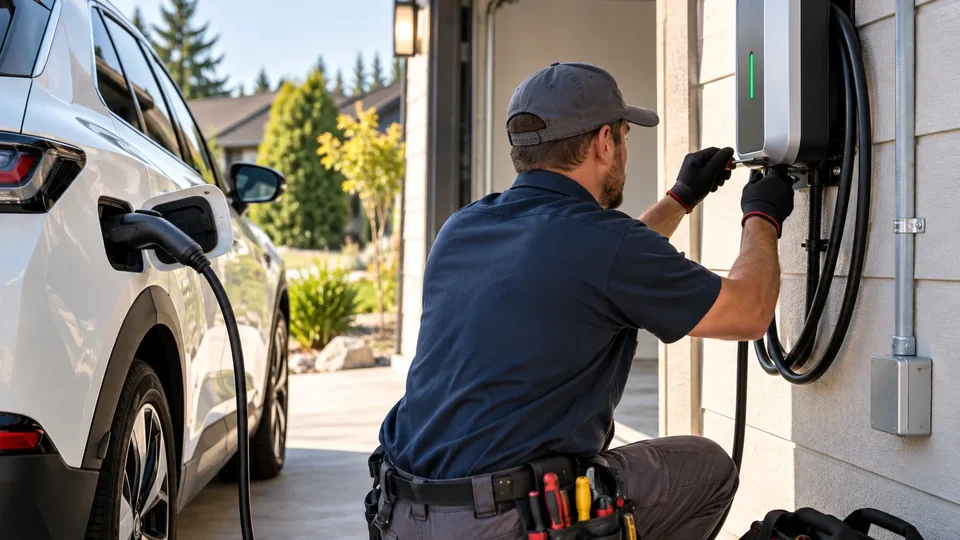
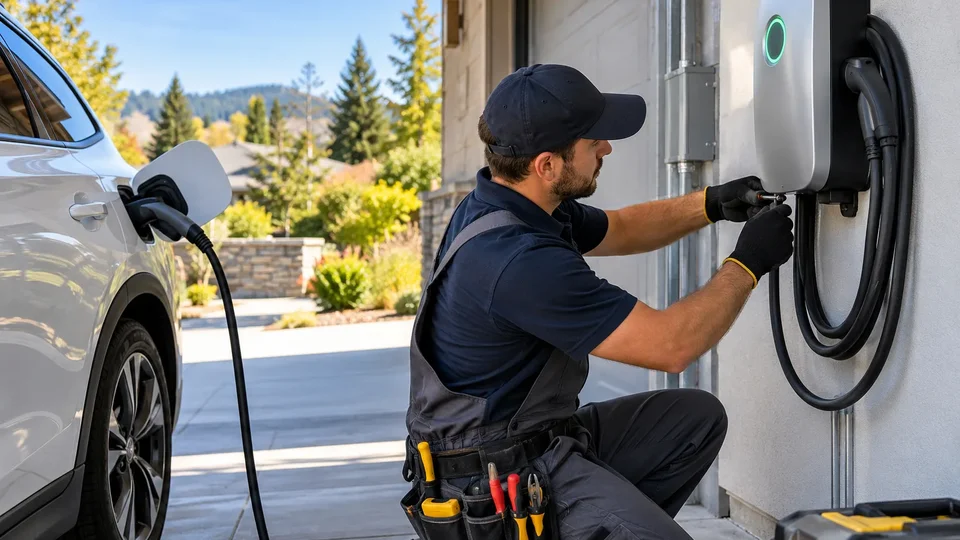
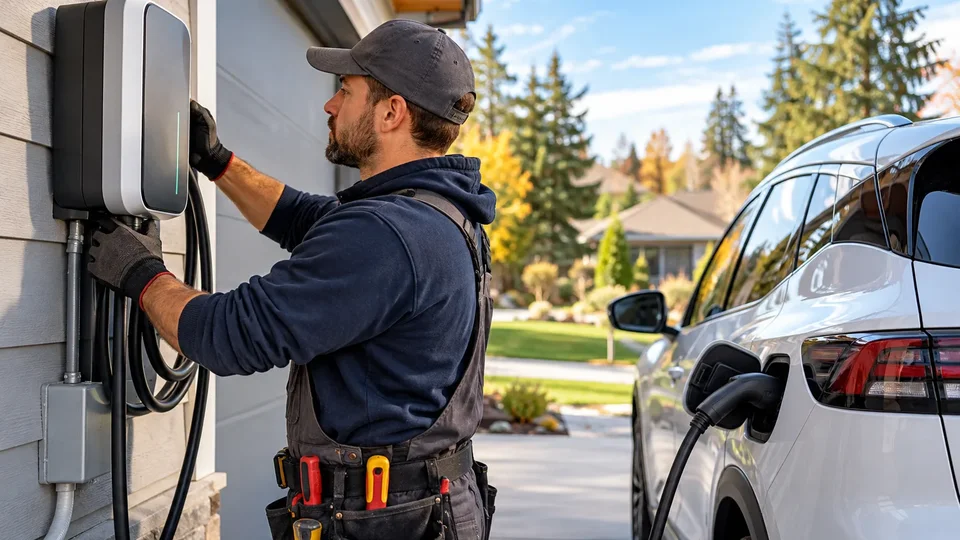
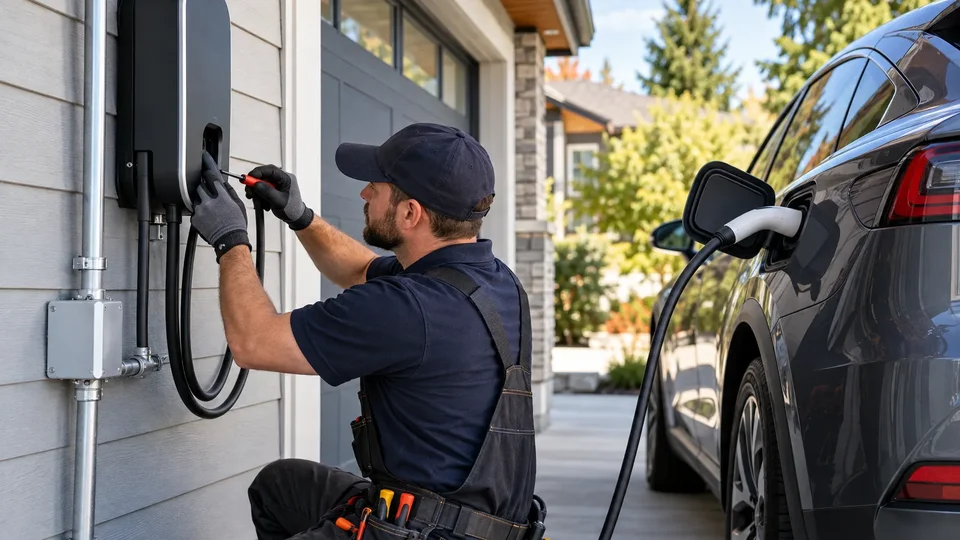
Maximize your 2026 clean energy savings with up to $1,000 in Avista Schedule 77 rebates, 30% Federal Section 30C tax credits, and Washington clean transportation grants. Turnkey municipal permitting and documentation handled by licensed master electricians.
Fast census tract check & Avista Schedule 77 qualification review.
Installing a Level 2 electric vehicle charging station at your Spokane home or commercial property is an exceptional investment that permanently unlocks rapid overnight charging, eliminates dependency on commercial fast chargers, and lowers daily driving expenses. However, maximizing available financial incentives is a top priority for Eastern Washington EV owners.
The incentive landscape in Spokane is dynamic and multi-layered. Financial assistance does not originate from a single source; rather, it represents a patchwork of regional utility programs administered by Avista Utilities, state clean transportation initiatives managed by the Washington Department of Commerce, and federal clean energy tax credits under the Internal Revenue Service (IRS).
Navigating these programs requires up-to-date, factual accuracy. Securing financial reimbursements requires strictly complying with program prerequisites: installing qualifying Energy Star certified hardware, hiring a licensed and bonded Washington electrical contractor, and securing an official municipal electrical permit and final inspection green tag from the City of Spokane Development Services Center or Washington Department of Labor & Industries (L&I).
Understanding which programs apply to your specific address prevents budgeting surprises. Below is an authentic 2026 summary of regional, state, and federal EV charging incentives available to Spokane County property owners:
| Incentive Program Name | Administering Agency | Eligible Property Type | Maximum Financial Incentive | Core Qualification Requirements | Current 2026 Status |
|---|---|---|---|---|---|
| Avista Transportation Electrification (Schedule 77) | Avista Utilities | Residential Single-Family & Multi-Family | $500 – $1,000 (Enhanced for income-qualified) | Active Avista electric account; Energy Star Level 2 charger; municipal permit & inspection green tag. | Active across funding cycles |
| Avista Commercial Make-Ready Grants | Avista Utilities | Commercial Workplaces, Retail, Multi-Family & Fleets | Up to 100% of make-ready costs | Commercial Avista customer; engineering study; installing minimum port quantities. | Active for approved projects |
| Federal Section 30C Refueling Property Credit | Internal Revenue Service (IRS) | Residential & Commercial (Eligible Census Tracts) | 30% up to $1,000 (Res.) / $100k (Comm.) | Property located in eligible low-income or non-urban census tract. IRS Form 8911. | Active through 2032 |
| Federal Section 25C Panel Modernization Credit | Internal Revenue Service (IRS) | Residential Primary Residences | 30% up to $600 | Upgrading to 200A panel installed in conjunction with clean energy appliances. IRS Form 5695. | Active through 2032 |
| Washington WAEVCP Community Grants | Washington Dept. of Commerce | Commercial Multi-Family, Fleet & Public Corridors | $20k – $200k+ Grant Awards | Community-based charging; prioritizes overburdened Eastern Washington communities. | Periodic grant cycles |
Utility programs operate within designated legislative cycles and capped annual budgets. Our licensed team checks active program availability directly with Avista customer coordinators prior to ordering equipment, ensuring you never face unexpected funding gaps.
Qualifying property owners can stack utility rebates with federal tax credits! For example, combining a $1,000 Avista rebate, a $1,000 Section 30C credit, and a $600 Section 25C panel upgrade credit can offset up to $2,600 in total project infrastructure expenses.
Avista Utilities is Eastern Washington's primary investor-owned electric utility provider, serving the City of Spokane, Spokane Valley, Liberty Lake, and surrounding communities. Under the Washington State Clean Energy Transformation Act (CETA) and Avista’s Transportation Electrification Plan (TEP), Avista administers dedicated customer incentive programs filed under Washington Tariff Schedule 77.
$500 to $1,000 Reimbursement
Residential customers installing a qualifying smart Level 2 charging station and dedicated 240V branch circuit receive direct rebates offsetting equipment and electrical installation costs.
Up to 100% Cost Coverage
Under Washington environmental justice statutes, Avista provides enhanced incentives—covering up to 100% of equipment and wiring expenses—for income-qualified households and designated underserved neighborhoods.
100% Utility Infrastructure Covered
Avista covers up to 100% of utility-side electrical infrastructure expenses (new transformers, switchgear, underground trenching) for approved workplaces, commercial fleets, and multifamily apartment housing.
Capturing rebates is only the first step in maximizing clean transportation savings. The ongoing operational savings of driving electric depend on how you charge your vehicle relative to regional utility grid demand.
Spokane residential customers enjoy highly competitive electricity rates compared to the national average. Standard residential electric service costs approximately 10.5¢ to 12.5¢ per kilowatt-hour (kWh).
To encourage electric vehicle owners to charge during nighttime hours when regional electrical demand is lowest, Avista is developing and deploying Time-of-Use (TOU) rate structures that reward scheduled off-peak charging with discounted rates.
Late afternoon and evening hours when domestic cooking, heating, and commercial business peak. Avoid high charging rates during this window.
Regional demand drops dramatically. Lowest electricity prices allow full battery replenishment at minimal cost.
An average 75 kWh battery recharge costs under $8.50 at off-peak rates, providing 250 to 300 miles of driving range.
Driving 12,000 miles/year costs ~$418 in electricity—saving over $1,200 annually compared to a 28-MPG gas vehicle in Spokane.
Washington State has established statutory goals to transition passenger vehicle sales to 100% electric and clean energy platforms. The Washington State Department of Commerce spearheads state-level clean transportation funding:
The Washington Department of Commerce administers competitive WAEVCP grant cycles funded through the state Climate Commitment Act, targeting multi-family housing complexes, commercial workplace plazas, municipal fleet yards, school districts, and publicly accessible charging hubs.
Grants heavily prioritize projects deployed in overburdened geographic areas and rural communities across Eastern Washington, filling charging gaps that private capital overlooks.
WAEVCP grants operate through discrete legislative funding rounds. Grants are awarded to property developers, commercial electrical contractors, and local governments during active cycles to build community charging hubs.
A frequent confusion among Spokane EV buyers is the Washington EV Instant Rebate (up to $9,000 for car purchase/lease). This applies strictly at the auto dealership—it does not pay for home electrical wiring. Home wiring incentives originate through Avista or federal tax credits.
Tax exemptions can significantly reduce project costs, but understanding current legislative expiration dates is critical for accurate budgeting:
Washington State previously enacted legislation (RCW 82.08.816) providing a state and local sales and use tax exemption on the purchase and installation of electric vehicle charging infrastructure. The retail sales tax exemption for standard passenger vehicle equipment had an official legislative sunset date. Commercial clean-fuel fleets periodically receive targeted sales tax relief under evolving state bills.
Because state tax policies fluctuate with legislative sessions, licensed electrical contractors itemize applicable Washington state and local sales taxes (currently ~9.0% in Spokane) transparently on all estimates, ensuring full Department of Revenue compliance and smooth CPA audit approval.
The federal government provides significant clean energy tax credits through the Inflation Reduction Act, administered directly by the Internal Revenue Service (IRS):
Under Internal Revenue Code Section 30C, homeowners can claim a federal tax credit equal to 30% of the total hardware purchase and professional electrical installation cost, up to a maximum credit of $1,000.
The charging station must be installed at the taxpayer’s principal residence, and the credit directly offsets your federal income tax liability dollar-for-dollar when filing your annual return using IRS Form 8911.
30% Up to $1,000 Credit
Claimed via IRS Form 8911. Offsets federal tax liability on equipment, electrical materials, permits, and professional contractor installation labor.
30% Up to $100,000 Credit
Businesses, workplaces, and multi-family property owners can claim up to $100,000 per charging location. Prevailing wage and apprenticeship rules apply.
Address Verification Service
Our team cross-references your street address against the Argonne National Laboratory Section 30C mapping database to confirm your property’s eligibility.
If installing an EV charger requires upgrading your home's main electrical panel from 100 amps to 200 amps, homeowners can leverage an additional federal clean energy tax credit under Section 25C:
Under the Energy Efficient Home Improvement Credit, homeowners who upgrade their electrical service panel (or subpanel) to 200 amps or greater can claim a 30% federal tax credit up to $600. To qualify, the upgrade must enable an electric vehicle charging station or heat pump.
When an older Spokane home combines a $1,000 Avista Schedule 77 rebate with a $1,000 Section 30C charger credit and a $600 Section 25C panel upgrade credit, total financial relief reaches $2,600, transforming an expensive infrastructure project into an affordable home investment.
Commercial real estate investors, property managers, and business owners have access to substantial capital assistance to deploy EV infrastructure:
Commercial electric service upgrades are often cost-prohibitive without utility partnership. Avista Utilities covers up to 100% of civil and electrical utility make-ready costs (transformers, distribution switchgear, primary conduit) for multi-port charging banks.
This program eliminates the massive upfront capital burden, allowing property managers to purchase and install Level 2 pedestals (such as ChargePoint or Wallbox) without paying for utility transformer upgrades.
Utility Infrastructure Covered
Avista covers high-cost transformer upgrades, utility switchgear, and asphalt trenching for qualifying commercial sites.
Federal 30% Project Credit
Offsets 30% of EVSE hardware and contractor wiring expenses up to $100,000 per location. Prevailing wage documentation compiled.
Modern Amenity Value
EV charging amenities command premium commercial lease rates and accelerate residential multifamily tenant lease-ups.
Logistics companies, school districts, and municipal agencies across Eastern Washington are modernizing delivery vans and service fleets:
Provides commercial businesses with tax credits of up to $7,500 for qualifying light-duty commercial EVs and up to $40,000 for heavy-duty electric commercial vehicles (such as electric freight trucks and transit buses).
Commercial fleet operators in Washington can earn and monetize Clean Fuel Standard credits based on the kilowatt-hours of clean electricity dispensed into fleet vehicles, creating ongoing quarterly revenue streams that offset operational electrical costs.
Following this structured workflow ensures your rebate application is approved on the first submission without bureaucratic delays:
Check active customer portal funding availability for your specific electric rate tariff.
Select qualifying Energy Star certified Level 2 charger (Tesla, ChargePoint, Wallbox, Emporia).
Licensed (01) electrical contractor pulls permit and installs dedicated 240V circuit.
City of Spokane or WA L&I inspector conducts safety walkthrough and signs final permit.
Upload itemized invoice, signed municipal permit certificate, and clear serial number photos.
Avista verifies documentation and issues direct reimbursement check within 30 to 60 days.
Over 25% of submitted EV rebate applications in Washington State face processing delays or outright rejection due to preventable documentation errors:
Purchasing cheap unbranded chargers online that lack EPA Energy Star marks results in immediate disqualification.
Hiring uncertified handymen who do not pull permits. Without a signed green tag, utility rebates are 100% rejected.
Submitting a front faceplate photo instead of a crisp close-up of the technical data sticker with barcode and serial #.
Utility programs mandate rebate filing within 90 to 180 days of install. Delaying submission forfeits your funds.
Here is how Spokane homeowners combine utility rebates and federal tax credits to minimize out-of-pocket costs on Level 2 installations:
| Project Scope | Gross Project Cost | Avista Schedule 77 Rebate | Federal Section 30C (30%) | Section 25C Panel Credit | Net Out-of-Pocket Cost |
|---|---|---|---|---|---|
| Standard 240V Circuit in Garage | $1,350 | -$750 | -$180 (Eligible Tract) | N/A | $420 |
| Long Run with Subpanel & Charger | $2,100 | -$1,000 | -$330 (Eligible Tract) | N/A | $770 |
| 200A Service Upgrade + EV Circuit | $4,800 | -$1,000 | -$450 (Eligible Tract) | -$600 (Panel Modernization) | $2,750 |
When factoring in annual fuel savings of over $1,200 per year compared to fueling a gasoline vehicle in Spokane, an upfront investment of $420 to $770 pays for itself completely within 4 to 8 months of driving!
Our licensed master electricians ensure your itemized invoice, signed municipal permit certificate, and manufacturer serial numbers match utility audit criteria precisely.
Avista rebate processors reject handwritten receipts and informal quotes. Proper compliance requires strict contractor standards:
Specific breakdown detailing copper wire gauge (#6 THHN), conduit type (EMT), breaker amperage, and EVSE model serial numbers.
Full contractor credentials displayed: Washington General Electrical Contractor License #EC-SPOKEV*821JA and UBI number.
Upon passing final municipal inspection, we hand you a complete digital packet ready for instant submission to Avista's portal.
Everything you need to know about EV charger rebates, tax credits, and utility incentives in Spokane, WA.
Never leave hundreds or thousands of dollars in available utility rebates, state clean energy grants, and federal tax credits on the table. Whether you drive a Tesla, Ford Lightning, Rivian, Hyundai, Chevrolet, or BMW electric vehicle, our licensed Washington master electricians deliver precision, code-compliant installations engineered to maximize your financial savings.
Direct scheduling with our licensed Spokane electrical team.